Small and young trees, along with most palms, transplant reasonably well if there’s a good receiving site and a real budget for the job. Large mature trees are a different story. Transplant shock takes a real toll on bigger trees, and excavating, balling, transporting, and replanting one often costs as much as removal plus a new nursery tree, sometimes more. Before you decide, get a certified arborist to look at the tree’s size, roots, and health. Call Branch Pro San Diego at (858) 400-4423 for a straight assessment.
Why San Diego homeowners consider relocation
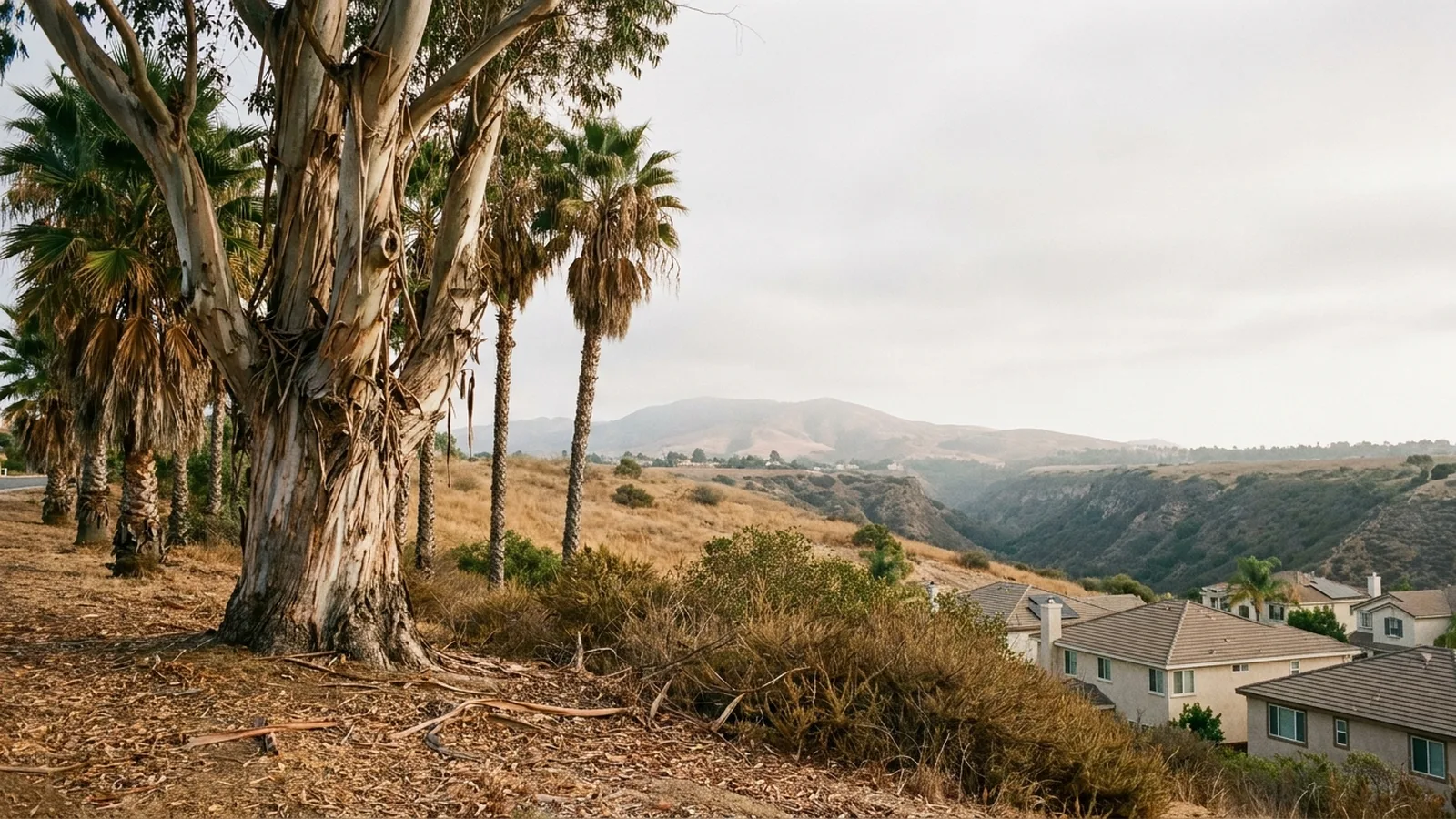
San Diego has a strong culture around keeping mature trees. HOA view ordinances, heritage tree protections in some neighborhoods, and years of watering an established tree through drought all make homeowners hesitant to cut one down. It’s a fair instinct. A tree that took fifteen years to grow into your yard isn’t something to remove lightly. That’s exactly why the removal-versus-relocation question deserves an honest, unemotional answer instead of a hopeful guess.
When relocation makes sense
Relocation is a real option in a handful of situations, and it works best when the numbers and the biology line up in its favor.
Smaller and younger trees
Younger trees have smaller, more compact root systems that survive the digging and replanting process far better than a mature tree’s spread-out root network. A five- or six-year-old ornamental or citrus tree has a real shot at thriving in a new spot. A forty-year-old oak does not.
Palms move better than most species
Palms are the exception to a lot of transplant rules. Their root systems are fibrous and more forgiving of the digging process than a broadleaf tree’s structural roots. Mature palms get relocated successfully across San Diego landscaping projects fairly often, which is part of why palm work sits in its own category. If you’re dealing specifically with a palm, our palm tree service crew handles both trimming and relocation-adjacent work.
High-sentiment or high-value specimens
Sometimes the decision isn’t purely financial. A tree planted for a family milestone, or a rare or expensive specimen, might be worth the extra cost and risk of relocation even with lower odds of success. That’s a legitimate reason, as long as you go in with clear eyes about what the process actually costs and how often it fails on larger specimens.
When relocation doesn’t make sense
For most mature trees on a typical residential lot, relocation isn’t the practical choice.
Large mature trees
The bigger the tree, the bigger the root ball has to be to keep it alive, and the lower the survival odds get. A mature tree’s root system extends far past the trunk, and standard excavation only captures a fraction of it. That’s enough to stress a smaller tree but often not enough to keep a large one alive long-term.
Trees with disease or structural problems
A tree that’s already declining, showing signs of disease, or carrying internal decay is a poor candidate for the added stress of relocation. If you’re noticing dieback, thinning canopy, or bark issues, read signs your tree is dying to see whether relocation is even on the table for that tree.
When the cost doesn’t pencil out
Excavating a mature tree’s root ball, transporting it, and replanting it is heavy equipment work. Add in the risk that the tree doesn’t survive the move, and the math often lands worse than a straight removal followed by planting a healthy new tree from a nursery. We break down realistic removal costs in tree removal pricing in San Diego for 2026, which is worth comparing against any relocation quote before you commit.
There’s also a category of tree where relocation was never really the right question. Some species growing in San Diego yards are invasive and outcompete native plants regardless of how well they’d transplant. If that’s what you’re dealing with, invasive tree species in San Diego covers which ones are worth removing outright rather than relocating.
What transplant shock actually means
Transplant shock happens when a tree loses enough of its root system in the moving process that it can’t support its existing canopy anymore. The tree responds by dropping leaves, slowing growth, or in worse cases, dying outright over the following one to two years. Bigger trees lose a larger percentage of their functional roots relative to their size during a dig, which is the core reason size correlates so strongly with failure rates. It’s not a guarantee of failure, but it’s a real risk that should factor into the decision, not get glossed over by a company eager to sell a bigger job.
Get an arborist’s read before you decide
The honest answer depends on your specific tree, not a general rule. Root structure, species, age, health, and the quality of the receiving site all matter. An arborist consultation gives you a real diagnosis of whether your tree is a good transplant candidate before anyone starts digging. If it’s not, you’ll know that up front instead of after spending thousands on a move that doesn’t take.
If removal ends up being the right call, our tree removal crews handle it cleanly and can talk through replacement options for the space.
Not sure which way your tree should go? Call Branch Pro San Diego at (858) 400-4423 and we’ll give you a straight answer, not a sales pitch.
Frequently asked questions
How big can a tree be and still survive relocation?
There’s no strict cutoff, but survival odds drop noticeably as trunk diameter and canopy size increase. Smaller, younger trees with compact root systems consistently do better than large mature specimens.
Is transplanting cheaper than removal?
Usually not. Excavating, balling, transporting, and replanting a tree typically costs more than removal, and that’s before factoring in the risk the tree doesn’t survive the move at all.
Do palm trees relocate better than other trees?
Yes, generally. Palms have fibrous root systems that tolerate the digging and replanting process better than broadleaf trees with structural roots, which is why palm relocation succeeds more often.
What is transplant shock and how long does it last?
Transplant shock is the stress response a tree shows after losing part of its root system in a move, including leaf drop and slowed growth. It typically shows up within the first year and can affect the tree for one to two years afterward.
Can Branch Pro San Diego tell me if my tree is worth saving?
Yes. Our arborist consultation evaluates root structure, health, and species before you decide between removal, relocation, or treatment, so you’re working from a real diagnosis instead of a guess.