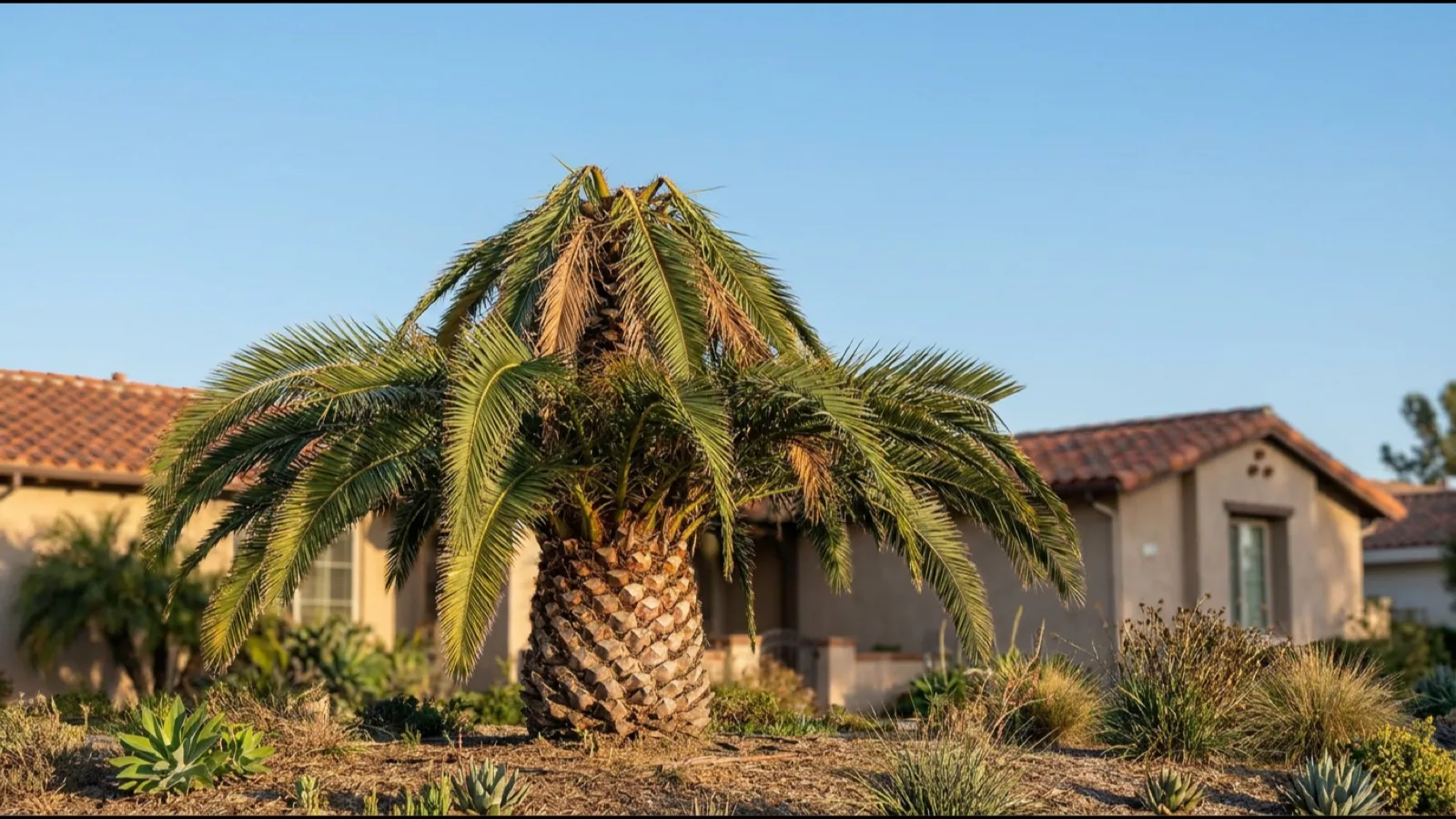
The South American palm weevil kills palms from the inside out, and by the time the crown collapses the tree can’t be saved. The larvae bore into the growing point at the top of the trunk and hollow it out. The first clear sign is the newest central fronds drooping and folding down while the trunk still looks fine. If you catch it before the crown gives way, a licensed applicator may be able to treat it. Once the top folds over, the palm has to come out.
What is the South American palm weevil?
It’s a large invasive beetle that breeds inside palm trees. The adult is black, about an inch and a half long, with a long curved snout. It has been established in San Diego County since the early 2010s, first showing up near the border and spreading north through the county’s palms. The damage isn’t from the adult beetle. Females lay eggs in the crown, and the grubs tunnel down into the soft growing tissue and eat it out. That growing point is the one part of a palm that can’t regrow, so once it’s destroyed the whole tree dies from the top down.
This pest is one of the reasons a dying palm in San Diego needs a real diagnosis, not a guess. For the broader picture of what kills palms here, our guide to common palm tree diseases in San Diego walks through the fungal problems that look similar from the ground.
How do I know if it’s the South American palm weevil?
The signature sign is a collapsing crown while the trunk looks healthy. Fungal diseases usually brown one side of the crown or start at the base. The weevil hits the center top first, so the newest spear leaves droop and the whole crown folds down like a spent umbrella. Look for these signs together:
| What you see | What it points to |
|---|---|
| Newest central fronds drooping, crown folding over | South American palm weevil, active infestation |
| Chewed frond bases, holes, or oozing near the crown | Weevil larvae feeding inside |
| Fibrous cocoons or grub tunnels in fallen frond stubs | Weevil breeding in the tree |
| A fermented or rotting smell at the top | Advanced weevil damage |
| One-sided browning with a stripe on the frond rib | Fungal disease, not the weevil |
| Slow browning of only the lowest, oldest fronds | Normal aging, not a pest |
If your palm is browning but the crown is still upright and firm, the cause is more likely disease or watering. Our post on why a palm turns brown or yellow covers those cases. If you see the crown itself sagging, treat it as urgent.
Which palms does it attack in San Diego?
Canary Island date palms are the main target across the county. These are the thick, pineapple-trunked palms in older yards, along boulevards, and on estate properties in places like La Jolla and Del Mar. The weevil also attacks true date palms and can move into other Phoenix palms. Thin-trunked Mexican fan palms are less commonly hit, though they aren’t immune.
If you own a mature Canary Island date palm, it’s worth knowing this pest is in the area. These palms are expensive to replace and dangerous to leave standing once they’re dead. A collapsing crown puts heavy fronds and a soft top over whatever sits below it.
Can a palm survive the South American palm weevil?
Sometimes, but only if it’s caught early. There’s a narrow window before the larvae destroy the growing point. In that window, a licensed pest control applicator can treat the palm with a systemic insecticide, and the tree may pull through. Once the crown starts to collapse, that growing point is already gone, and no treatment or fertilizer brings it back. At that stage the honest answer is removal.
This is why fast diagnosis matters so much. A palm that still has a firm, upright crown may be treatable. A palm whose top is folding over is a removal. If you’re not sure which one you’re looking at, our certified arborist consultation can tell you within minutes on site, and our tree health diagnosis service confirms the cause before anyone recommends spending money on treatment.
When does an infested palm have to be removed?
Once the growing point is destroyed, the palm is dead and becomes a hazard as it dries out. Remove it when any of these are true:
- The crown has folded or collapsed. The growing point is gone and the palm won’t recover.
- The top is soft or you can smell rot. The internal tissue has broken down.
- A licensed applicator confirms an established infestation. Treatment can’t reverse it at that point.
- The dead palm sits over a house, driveway, or walkway. A soft, weevil-killed crown can drop fronds or fail without warning.
Removing an infested palm also protects the palms around it, since the weevil breeds in dead and dying material and moves to new hosts. At Branch Pro San Diego, our crews handle infested-palm removals across the county, including full-height Canary Island date palms that need a crane. We haul and dispose of the infested material properly so the pest doesn’t spread to a neighbor’s tree. For what removal runs, our guide to palm tree removal cost in San Diego breaks it down by size, and our tree removal team can give a same-day estimate.
If the palm is already leaning or the crown is over a structure, don’t wait for a scheduled visit. Call our emergency tree service line so a dead palm doesn’t come down on its own terms.
How to protect a healthy palm
You can’t spray your way to immunity, but you can lower the risk and catch problems early.
- Watch the crown, not just the fronds. Check the center top of the palm every few weeks in summer and fall. A sagging spear leaf is the earliest warning.
- Don’t over-trim. Cutting green fronds and wounding the crown attracts egg-laying females. A correct trim leaves a full, round crown of green growth.
- Use clean tools. The weevil can spread on gear moved between trees, so a real crew sanitizes between palms.
- Get preventive treatment for high-value palms. For a prized, healthy Canary Island date palm near known infestations, a licensed applicator can set up a preventive insecticide program. Ask an arborist whether your palm is a candidate.
A dying palm is one of the clearest signs your tree is dying that a homeowner can spot from the ground, and with this pest, speed is everything. The sooner someone looks at a sagging crown, the better the odds of saving the tree or removing it safely.
Frequently asked questions
What does the South American palm weevil do to a palm?
The larvae bore into the growing point at the top of the trunk and eat the soft tissue. That growing point can’t regrow, so the crown collapses and the palm dies from the top down. The adult beetle itself does little damage, but it lays the eggs that start the process.
What’s the first sign of a palm weevil infestation?
A drooping or collapsing crown while the trunk still looks healthy. The newest central fronds sag and fold down like a spent umbrella. You may also see chewed frond bases, holes near the crown, or a fermented smell at the top.
Can a palm be saved after a weevil infestation?
Only if it’s caught very early, before the growing point is destroyed. A licensed applicator can treat a palm with a systemic insecticide in that narrow window. Once the crown folds over, the palm can’t be saved and needs removal.
Which palms get attacked most in San Diego?
Canary Island date palms are the main target across the county. The weevil also hits true date palms and other Phoenix palms. Mexican fan palms are less often affected but aren’t fully safe.
How fast should I act if I think it’s the weevil?
Fast. The larvae destroy the growing point within weeks, and a dead palm becomes a falling hazard. Call (858) 400-4423 as soon as you notice a sagging crown so we can diagnose it before the tree fails or the pest spreads.