Tree health diagnosis before treatment or removal
Leaf loss, bark changes, holes, dieback, and mushrooms are clues, not final diagnoses. Branch Pro San Diego connects you with licensed and insured independent tree service professionals who can assess the tree and explain reasonable next steps. You hire and pay the matched professional directly. Before approving spraying, injection, fertilization, pruning, or removal, get a written scope that separates observed symptoms from the suspected cause, testing limits, treatment goal, and conditions that would change the recommendation.
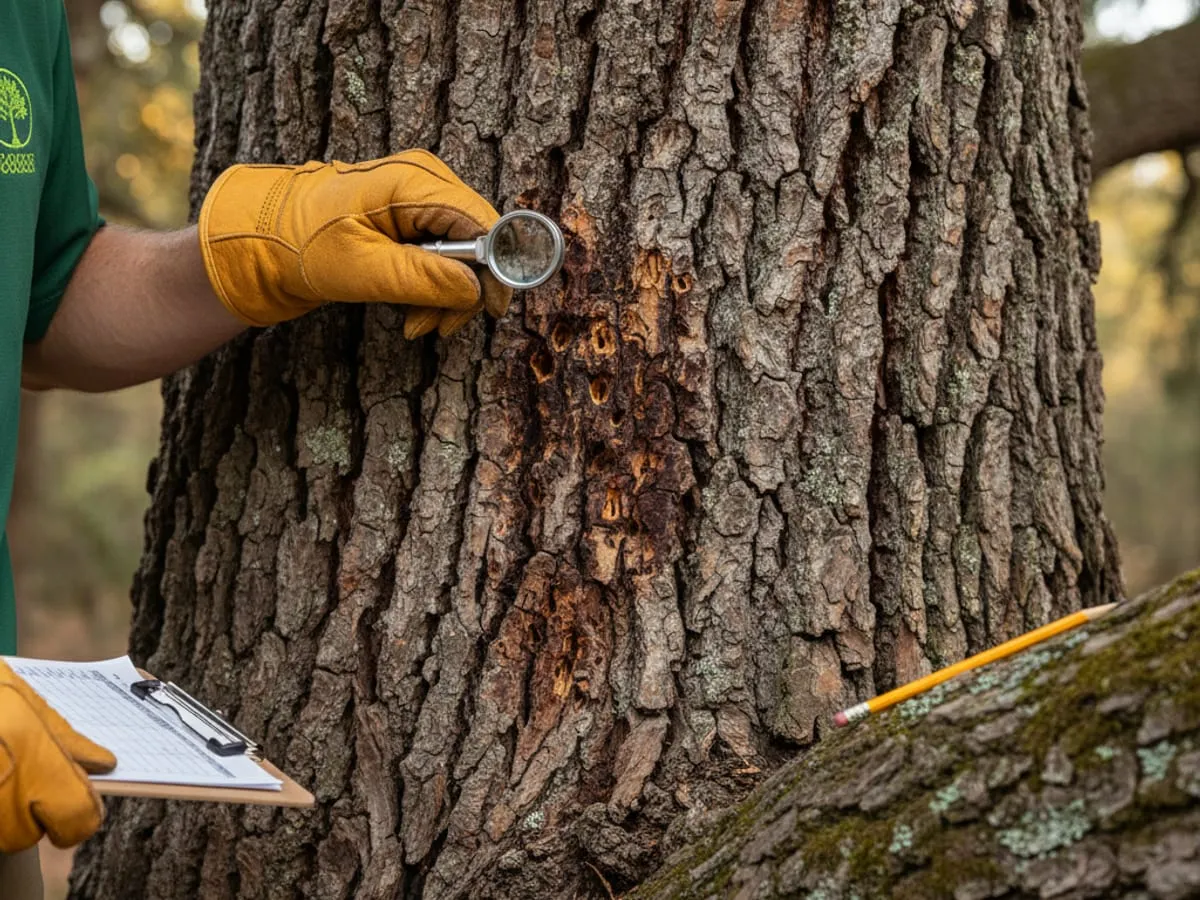
What scope should you agree for tree health diagnosis in San Diego?
- Record canopy, branch, trunk, root-zone, and site symptoms
- Distinguish confirmed findings from possible causes requiring further review
- Compare pest damage with irrigation, drainage, compaction, injury, and pruning history
- Define whether sampling, laboratory work, excavation, or specialist review is included
- Assess the extent of affected branches, trunk tissue, roots, and structural concerns
- Compare monitoring, site changes, targeted treatment, pruning, and removal
- Identify pesticide licensing or individual credentials to verify when relevant
- Document treatment goals, limits, follow-up criteria, and removal triggers
When do you need tree health diagnosis?
- Canopy thinning or branch dieback is spreading
- Bark is cracking, staining, loosening, or showing holes
- Leaves are changing color, size, density, or drop pattern
- Fine wood particles, galleries, or repeated insect activity appear on the trunk
- Fungal growth appears on the trunk, roots, or surrounding soil
- Symptoms began after construction, excavation, irrigation changes, or soil compaction
- You need evidence before choosing treatment, pruning, or removal
What is different about tree health diagnosis in San Diego County?
Davey's San Diego page lists Sudden Oak Death alongside palm weevil and bark beetles. Sudden Oak Death is not the default local oak story. Goldspotted oak borer and construction injury are the more useful first questions for many inland oaks. Palms may involve South American palm weevil. Leaf color alone is not a diagnosis.
Fertilization, injection, and spraying are treatments, not diagnoses. Ask what suspected cause the treatment addresses, what testing is included, and what result would change the recommendation. Branch Pro connects you with licensed and insured independent professionals. You hire and pay that professional directly.
What do homeowners ask about tree health diagnosis?
Can a tree with beetle damage be saved?
It depends on the pest, tree species, vigor, affected area, and damage severity. A few affected branches aren't the same as extensive trunk infestation. Goldspotted oak borer treatment may be considered for lightly damaged, high-value trees, while heavily damaged trees may need removal and careful wood handling. Crown thinning or bark staining alone doesn't confirm that pest.
My tree's leaves look bad. Is it dying?
Leaf symptoms can reflect several different problems. Irrigation changes, root injury, compacted soil, pests, disease, and past pruning can produce overlapping signs. Track where symptoms began and whether they are spreading. The assessment should connect any recommendation to observed evidence instead of treating leaf color alone as proof of terminal decline.
What's deep-root fertilization?
The term can describe placing nutrients below the surface, but it doesn't identify the tree's problem by itself. Ask what deficiency or soil condition the treatment addresses, what material and method are proposed, and how results will be evaluated. Fertilization shouldn't substitute for investigating root injury, drainage, pests, or structural decline.
Should I verify an ISA credential?
ISA certification belongs to an individual and is separate from a California contractor license. If that credential matters to your decision, ask who will inspect the tree and verify that person's current status through ISA's directory. For contracted tree work, also check the contractor's current classification and status through CSLB.
Is Sudden Oak Death a common San Diego tree problem?
National tree-care pages sometimes list Sudden Oak Death as a local San Diego issue. That disease is associated with other parts of California. Local oak concerns more often involve goldspotted oak borer, drought stress, or construction injury. Palm decline may involve South American palm weevil. Crown thinning or bark staining alone does not confirm any of those. Get the pest or disease named from observed evidence before approving treatment or removal.
Related tree health diagnosis guides
How do you find tree health diagnosis in San Diego County?
Branch Pro connects homeowners with licensed and insured independent tree-service professionals. We don't perform the work, set the price, or provide the warranty.
Call (858) 400-4423 and describe the tree, work objective, address, and access. The matched professional confirms availability, assessment needs, scope, and price. You hire and pay that professional directly.
Choose a city for tree health diagnosis information
Pick a city to review local site conditions and the scope questions to discuss with an independent professional. Availability and job terms come from the professional you hire.
See tree health diagnosis in all 66 cities
Need tree health diagnosis in San Diego County?
Call and describe the tree. We'll connect you with a licensed and insured independent professional whom you hire and pay directly.