If a tree just fell on your neighbor’s property, whose yard it grew in matters less right now than getting everyone safe. Clear the area, watch for downed power lines and a gas smell if it hit a structure, and don’t move anything until you’ve documented the damage. Once the scene is secure, call (858) 400-4423 for a same-day assessment and safe removal.
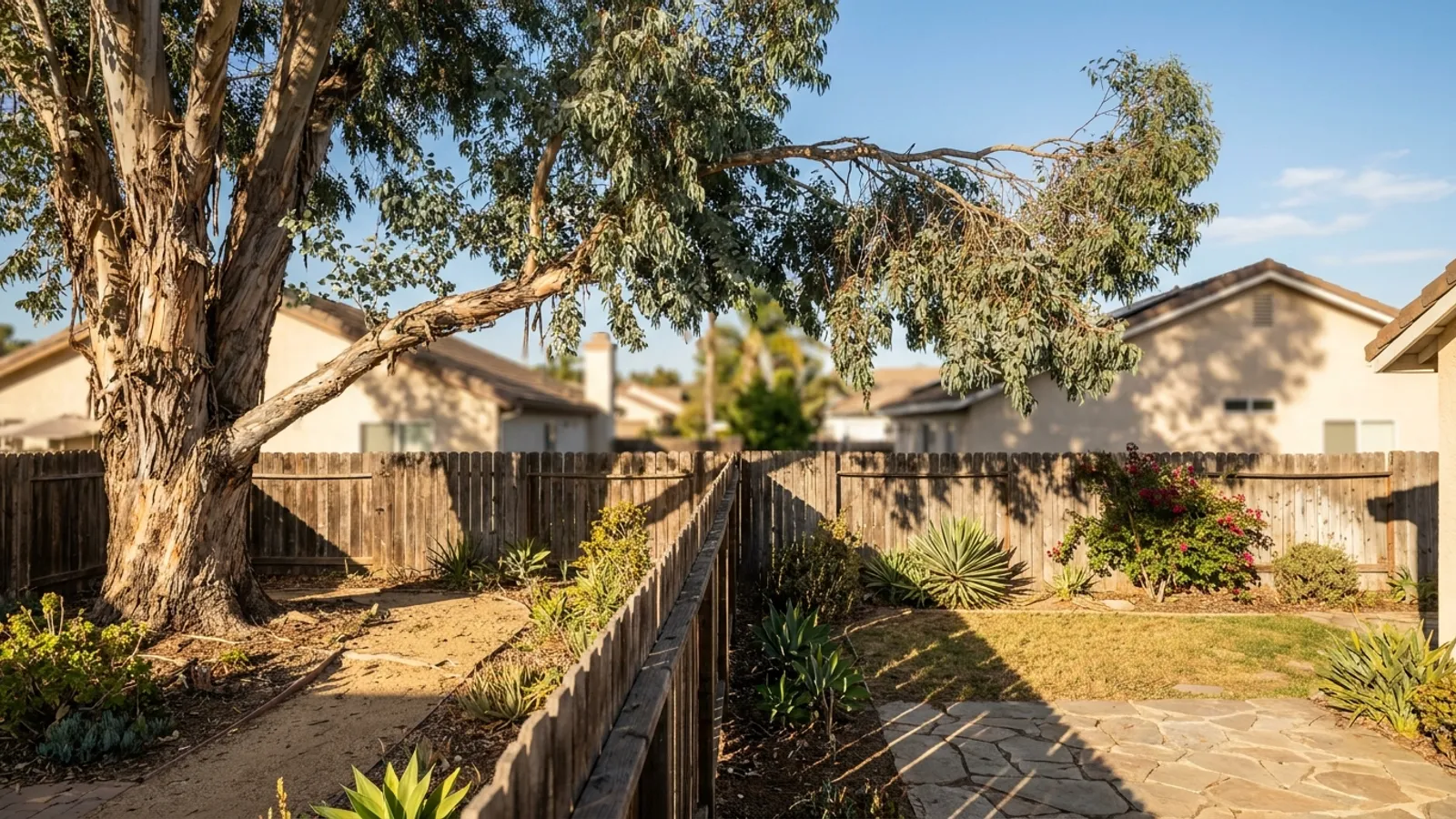
Get everyone clear of the tree first
Before you think about insurance or property lines, get people and pets away from the tree. A trunk that looks stable can still shift as branches settle or as the root ball loses its grip in soft ground. Keep kids and animals out of the area entirely.
If the tree came down across power lines, treat every line as live. Don’t touch the tree, the fence, or anything it’s resting on. Call 911 and SDG&E right away, then stay back until a crew confirms the lines are de-energized.
If the tree hit a structure
If the tree landed on a house, garage, shed, or car, check first for anyone who might be inside or trapped. If it struck a gas line or you smell gas near the break, get everyone out and call 911 from a safe distance. Structural damage from a fallen tree can also compromise a roof or wall in ways that aren’t obvious from the ground, so stay out of any structure the tree touched until it’s been checked.
Document the damage before anything moves
Once the scene is safe, take photos and video from several angles before a single branch gets cut or dragged away. Capture the whole tree, the break point at the trunk, the root ball if it uprooted, the fence line, and any damage to structures, cars, or landscaping on either side of the property.
This matters more than most homeowners realize. Insurance adjusters and, if it ever comes to it, small claims court both rely heavily on what the scene looked like right after the tree fell. Once a crew clears debris, that evidence is gone.
Talk to your neighbor early and keep it calm
In most San Diego neighborhoods, a fallen tree gets sorted out between two homeowners and their insurance companies, not through a legal fight. Let your neighbor know what happened, share your photos, and be upfront about what you’re planning to do next. A short, direct conversation early on tends to keep things from turning into a dispute later.
How insurance usually handles a fallen tree
As a general rule, and this isn’t legal advice, each property owner’s own homeowners policy covers damage to their own property, no matter whose yard the tree started in. If the tree fell from your side onto your neighbor’s garage, their insurance typically handles their garage, and your insurance would handle any damage on your side.
There’s an important exception. If the tree was already dead, diseased, or visibly hazardous and the owner knew about it and did nothing, that neglect can shift liability back onto the tree’s owner. That’s a bigger factor in how the claim plays out than most people expect.
Removal-cost coverage is usually limited too. Many policies only cover tree removal up to a set amount, often somewhere in the $500 to $1,000 range, and only when the tree actually hit a covered structure. A tree that falls in the yard without hitting anything often isn’t covered for removal at all. For a fuller breakdown of what’s typically covered and what isn’t, see our guide on whether insurance covers tree removal in San Diego.
Confirm the specifics with your own carrier. Policies vary, and the person who can actually tell you what’s covered is the one who wrote your policy.
Where the tree came from still matters
Ownership and origin come up again once the insurance conversation moves past the basics, especially if there’s any disagreement about who’s responsible. California has real rules around encroaching trees, shared property lines, and hazardous trees that a neighbor was warned about. We cover that legal side in detail in our guide to neighbor tree and property line law in San Diego. This page is about what to do in the first hour. That one is about the rules once the dust settles.
Get the tree removed by a licensed, insured crew
Once the scene is documented and your neighbor knows what’s happening, get the tree removed. Hire a licensed, insured crew, not a truck that showed up after seeing the damage from the street. If the removal is done wrong, or by someone without insurance, that can turn into a second problem on top of the first one.
A tree resting on a structure, a fence, or power lines is exactly the kind of job that needs an emergency crew, not a scheduled appointment three weeks out. Our emergency tree service covers same-day response for situations like this across San Diego County, from Scripps Ranch to Chula Vista. For more on how a fast-response call works from start to finish, read our emergency tree removal guide. If you’re also wondering what after-hours timing does to the price, we break that down in our post on emergency tree removal cost at night and on weekends.
Frequently asked questions
Who pays for a tree that falls from my yard onto my neighbor’s property?
In most cases, your neighbor’s own homeowners insurance covers damage to their property, even if the tree grew on your side of the fence. That changes if the tree was already dead or clearly hazardous and you knew about it and didn’t act. Confirm the details with both insurance carriers.
Do I have to remove the tree myself if it fell on my neighbor’s land?
Not necessarily, but it depends on where the trunk and root ball ended up and what your neighbor’s insurance requires. Talk to your neighbor and your insurance company early so everyone agrees on who’s handling removal before a crew shows up.
What if the tree was already dead or leaning before it fell?
That’s one of the few things that can shift liability toward the tree’s owner, especially if a neighbor had raised concerns before it fell. Photos, prior arborist reports, or even a text message warning about a leaning tree can matter here.
Should I call the city or the county about a fallen tree?
Only if it’s blocking a public street, sidewalk, or hit public infrastructure like a power pole. A tree that fell between two private properties is typically a private matter between homeowners and their insurance companies.
How fast can Branch Pro get a fallen tree removed?
We offer same-day emergency response across San Diego County for trees on structures, vehicles, or power lines. Call (858) 400-4423 and we’ll walk you through what we need to get a crew out safely.