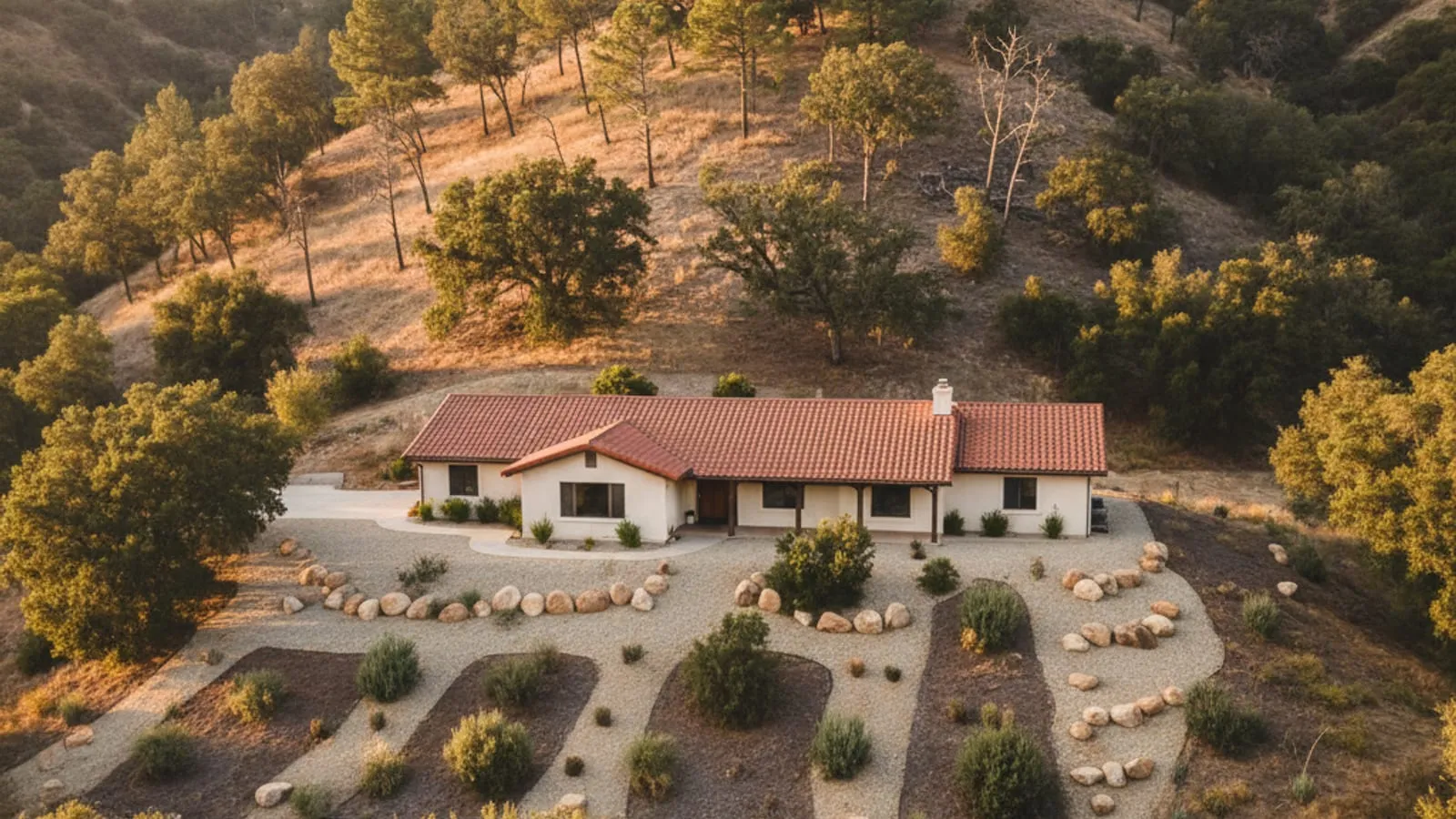
If your home sits in a Very High Fire Severity Zone, the ground within 5 feet of your house, called Zone 0, has to be ember-resistant. That means no dead plants, no mulch against the walls, and tree branches held back at least 5 feet from your roof with the canopy at least 10 feet from the structure. Branch Pro San Diego trims and removes the limbs crowding your home so you’re ready before the state’s phased deadline lands. Call (858) 400-4423 and we’ll walk the property with you.
What Zone 0 actually is
Zone 0 is the newest and strictest layer of California’s defensible space rules. It’s the five-foot ring immediately around your house, deck, and any attached structure. Fire scientists call it the “ember-resistant zone” because embers, not walls of flame, are what actually ignite most homes during a wildfire. A single ember landing in dry mulch or a pile of pine needles against your siding can start a structure fire long before any flame front arrives.
Zones 1 and 2 have existed for years and focus on thinning vegetation. Zone 0 is different. It asks homeowners to treat the space right against their house almost like a moat, clear of anything that can catch an ember and hold a flame.
Where this rule came from
Zone 0 traces back to Assembly Bill 3074, signed in 2020, which directed the state to define ember-resistant zone requirements. The California Board of Forestry and Fire Protection has been working through the formal rulemaking process since then, and Governor Newsom’s Executive Order N-18-25 pushed the Board to finish the job. The Board paused finalizing the regulation in late 2025 for further review, then reconvened work on it in 2026. The current draft leans toward education and outreach first, with enforcement penalties phased in over roughly five years rather than dropped on homeowners all at once.
Who has to comply, and by when
New construction inside a Very High Fire Severity Zone already has to meet Zone 0 standards. It gets checked during the building permit review, so there’s no grace period for new homes.
For existing homes in Very High Fire Severity Zones, the target compliance window is around February 2027. Treat that as the direction things are heading, not a locked-in fine date. The rulemaking is still moving through revisions, and the Board’s current posture favors guidance over citations in the early years of the rollout. That said, waiting until the rule is finalized to start clearing your Zone 0 is a bad bet. Insurance carriers are already asking about defensible space compliance on renewal inspections in fire-prone areas, well ahead of any state enforcement date.
Why so much of San Diego is affected
This isn’t a rural-only problem. Roughly 142,571 acres, about two-thirds of the City of San Diego, sit inside a Very High Fire Severity Zone. Add the foothill and backcountry communities across the county, places like Poway, Ramona, Alpine, Jamul, Fallbrook, Valley Center, Julian, Descanso, and Lakeside, and you’re looking at a huge share of homes that will eventually need to show Zone 0 compliance.
What the 5-foot zone requires
Zone 0 rules cover more than trees, though trees tend to be the hardest part for most property owners. The full list includes:
- Removing dead plants, dry leaves, pine needles, bark mulch, firewood stacks, trash, and general debris from within 5 feet of the structure
- Swapping combustible ground cover for non-combustible hardscape like concrete, gravel, pavers, or bare soil
- Keeping roofs, gutters, decks, and the crawl space under the home clear of debris
- Replacing combustible fences, gates, and arbors that attach directly to the house with non-combustible materials
- Moving trash bins, boats, RVs, and vehicles out of the 5-foot zone
Trees are where most homeowners fall short
Overhanging limbs in Zone 0 are one of the most common ember and fire pathways into a home, and they’re also the piece most people put off. The standard is specific: tree branches need to stay at least 5 feet clear of your roofline, and the canopy itself needs to sit at least 10 feet away from the structure. A mature coast live oak or eucalyptus that’s been growing toward your roofline for a decade usually needs real limbing-up work, not a quick trim, to hit that clearance. In some cases the tree is simply too close to the house to fix with pruning alone, and removal is the honest answer.
Zone 0 fits inside a bigger defensible space picture
Zone 0 doesn’t replace the older zones, it stacks on top of them. Zone 1 runs from 5 to 30 feet out and follows the “lean, clean, and green” standard: less fuel, more spacing, healthy irrigated plants. Zone 2 runs from 30 to 100 feet and focuses on reducing and spacing wildland fuel rather than stripping it entirely. Together, all three zones make up the 100-foot defensible space requirement under Public Resources Code 4291, and Zone 0 is simply the tightest, newest layer closest to your home.
Getting your property ready before the deadline
This is squarely a land-clearing and tree-service job, not a landscaping weekend project. Our land clearing service is built around exactly this kind of defensible-space work: identifying which limbs and trees are crowding your Zone 0, deciding what can be limbed up versus what needs to come out, and hauling the debris so it’s not sitting in a pile against your house while you wait for pickup day.
If you’re prepping ahead of fire season more broadly, our fire-safe tree trimming checklist and Santa Ana wind tree prep guide cover the zones beyond Zone 0. And if your property sits in the unincorporated county, check our guide on tree removal permits for unincorporated San Diego County before you remove anything protected.
Frequently asked questions
What is Zone 0 defensible space in California?
Zone 0 is the 0-to-5-foot ember-resistant zone immediately around a home, required in Very High Fire Severity Zones. It calls for non-combustible ground cover, no dead vegetation or debris, and tree branches held back at least 5 feet from the roof.
When do I have to comply with Zone 0 rules?
New construction in a Very High Fire Severity Zone already has to meet Zone 0 standards during permit review. Existing homes are looking at a target compliance window around February 2027, under a phased, education-first rollout that the state is still finalizing.
Does Zone 0 apply everywhere in San Diego?
It applies to properties inside a Very High Fire Severity Zone, which covers roughly two-thirds of the City of San Diego along with many foothill and backcountry communities countywide. If you’re not sure your property qualifies, call us and we can help you check.
Can I keep any trees in my Zone 0 area?
Yes, as long as the canopy sits at least 10 feet from your structure and no branches come within 5 feet of your roofline. Many trees can stay in place with the right limbing-up work rather than full removal.
What happens if I don’t comply?
The state’s current approach favors outreach and guidance over immediate penalties while the rule is finalized. Even so, insurance carriers in fire-prone areas are already factoring defensible space into renewal inspections, so it’s worth getting ahead of it rather than waiting on enforcement dates.
Ready to get your property compliant? Call Branch Pro San Diego at (858) 400-4423 and we’ll assess your Zone 0 clearance the same week.