Most tree removals on an already-developed residential lot in unincorporated San Diego County don’t require a County permit, and where a permit is required, it’s generally free. The trigger is what’s on your parcel: native oak woodlands, riparian or wetland areas, steep slopes over 25% grade, sensitive habitat, or trees in the public right-of-way all fall under the County’s Resource Protection Ordinance and need review first. Call (858) 400-4423 before you cut, and we’ll help you figure out whether your property is affected.
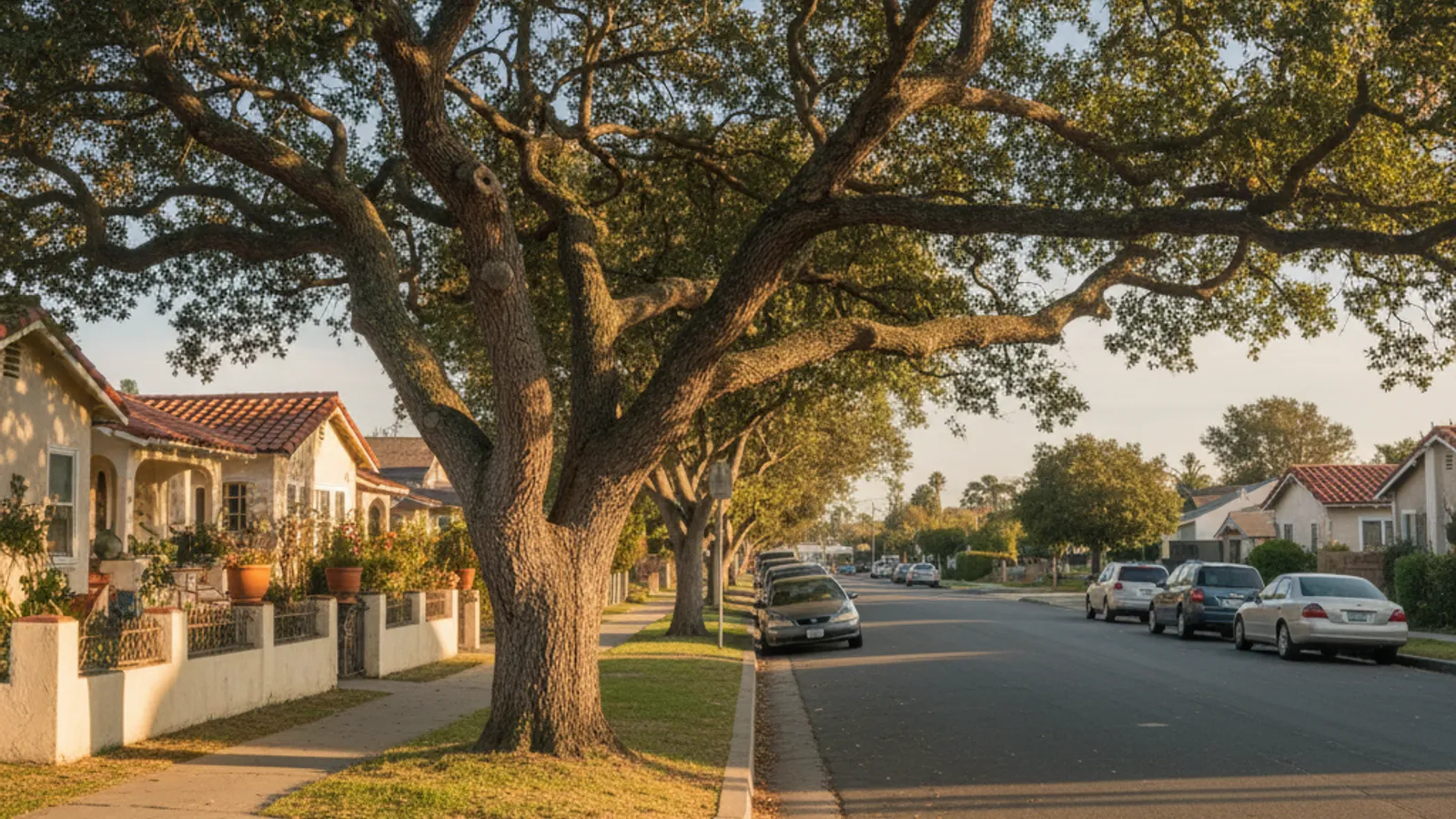
Unincorporated county rules are their own thing
Unincorporated San Diego County covers the backcountry and the county islands scattered between the incorporated cities, places like Ramona, Alpine, Jamul, Fallbrook, Valley Center, Julian, Bonsall, Descanso, and Lakeside. These areas run on different rules than the City of San Diego, which has its own tree removal process under Council Policy 900-19, and different again from the 18 other incorporated cities, each of which sets its own local ordinance. If you own property in one of these unincorporated communities, the City’s process doesn’t apply to you at all, and neither does any single city’s tree ordinance.
Who handles permits out here
The County of San Diego Department of Public Works oversees tree permitting in unincorporated areas. If you need to check whether your parcel requires review, call their permit info line at 858-694-2055. There’s generally no fee attached to a County tree permit when one is required, which is a meaningful difference from some incorporated cities that charge per-tree removal fees.
The Resource Protection Ordinance is the real gatekeeper
The piece that actually determines whether you need permission isn’t a blanket “tree removal permit” the way some cities require. It’s the Resource Protection Ordinance, usually shortened to RPO. The RPO protects specific categories of sensitive land within the unincorporated county:
- Wetlands and floodplains
- Steep slopes, generally 25% grade and steeper
- Sensitive habitat lands
- Significant prehistoric and historic sites
If your parcel, or the part of it where the tree sits, falls into one of these categories, removing trees can trigger environmental review. Depending on what’s found, the County may attach conditions to the removal, and in some cases properties end up with an open-space easement that restricts future clearing.
What usually doesn’t need review
If you’ve got a mature pepper tree or a pine that’s been sitting in your developed backyard for years, on a lot that isn’t on a steep slope, isn’t near a wetland, and isn’t flagged as sensitive habitat, you can typically remove it without going through County review. Most day-to-day residential removals on already-developed lots fall into this category.
What usually does need review
A handful of situations reliably trigger the RPO process:
- Native oak woodlands and individual native oaks, which the County treats as a protected resource category
- Riparian areas and anything near a wetland or seasonal creek
- Native sensitive habitat, including coastal sage scrub in some areas
- Parcels on steep slopes, 25% grade or steeper
- Trees standing in the public right-of-way
If your property also sits in the coastal zone, add another layer: the California Coastal Commission may need to weigh in before you remove certain trees, on top of anything the County requires.
Fire-safety removals still need a quick check
Removing a dead, dying, diseased, or genuinely hazardous tree for fire safety or to meet defensible-space requirements under PRC 4291 is generally allowed and, honestly, encouraged. But sensitive-habitat protections under the RPO don’t automatically go away just because the tree is dead. If that dead oak sits in a protected riparian corridor, you’ll still want to confirm with the County before cutting, even though the removal itself is the right call for fire safety. If you’re working through broader defensible-space compliance, our guide to Zone 0 defensible space requirements covers the newest state rules affecting the area right around your home.
The honest answer: it’s parcel-specific
There’s no single yes-or-no answer that covers every unincorporated property, and anyone who tells you otherwise hasn’t looked at your parcel. The right move is to call County DPW at 858-694-2055, or talk to a licensed arborist, before you remove anything on a lot you suspect might be on a slope, near water, or holding native oaks. Tree companies working this trade every day in Ramona, Alpine, Julian, and the rest of the backcountry can usually tell you within a few minutes whether your situation needs a closer look.
What Branch Pro handles for you
Our tree removal service covers the actual work once you know where you stand: felling, hauling, stump handling, and cleanup, done by a crew that carries the state’s C-61/D49 tree service license. You can verify any tree contractor’s license through the CSLB license lookup tool before hiring. If your parcel needs RPO review, we can point you toward what the County will likely ask for and help you avoid starting work that has to stop halfway through.
If your property is inside city limits instead, our guides on tree removal permits in San Diego and City of San Diego tree removal rules cover that separate process. And if you’re weighing Zone 0 defensible-space work alongside a removal, our Zone 0 deadline guide walks through what the state now expects.
Frequently asked questions
Do I need a permit to remove a tree in unincorporated San Diego County?
Usually not, if the tree sits on an already-developed residential lot that isn’t on a steep slope, near a wetland, or holding native oak or sensitive habitat. If any of those apply, the County’s Resource Protection Ordinance likely requires review first.
What is the Resource Protection Ordinance?
The RPO is the County ordinance that protects wetlands, floodplains, steep slopes of 25% grade or steeper, sensitive habitat lands, and significant historic or prehistoric sites in unincorporated San Diego County. Tree removal on land covered by the RPO can trigger environmental review and conditions.
Who do I call to check if my property needs a permit?
Call the County of San Diego Department of Public Works permit info line at 858-694-2055. They can tell you whether your parcel falls under RPO protections before you start any removal work.
Is there a fee for a County tree removal permit?
Generally no. When a County tree permit is required in unincorporated San Diego County, it’s typically issued without a fee, unlike some incorporated cities that charge per-tree.
Can I remove a dead or hazardous tree without going through the RPO process?
Removing dead, dying, or hazardous trees for fire safety is generally allowed and encouraged, but sensitive-habitat protections can still apply even to a dead tree. Confirm with County DPW first if the tree sits in a riparian area, on a steep slope, or among native oaks.
Have a tree down or a removal you need to plan around County rules? Call Branch Pro San Diego at (858) 400-4423 and we’ll help you sort out what’s required.