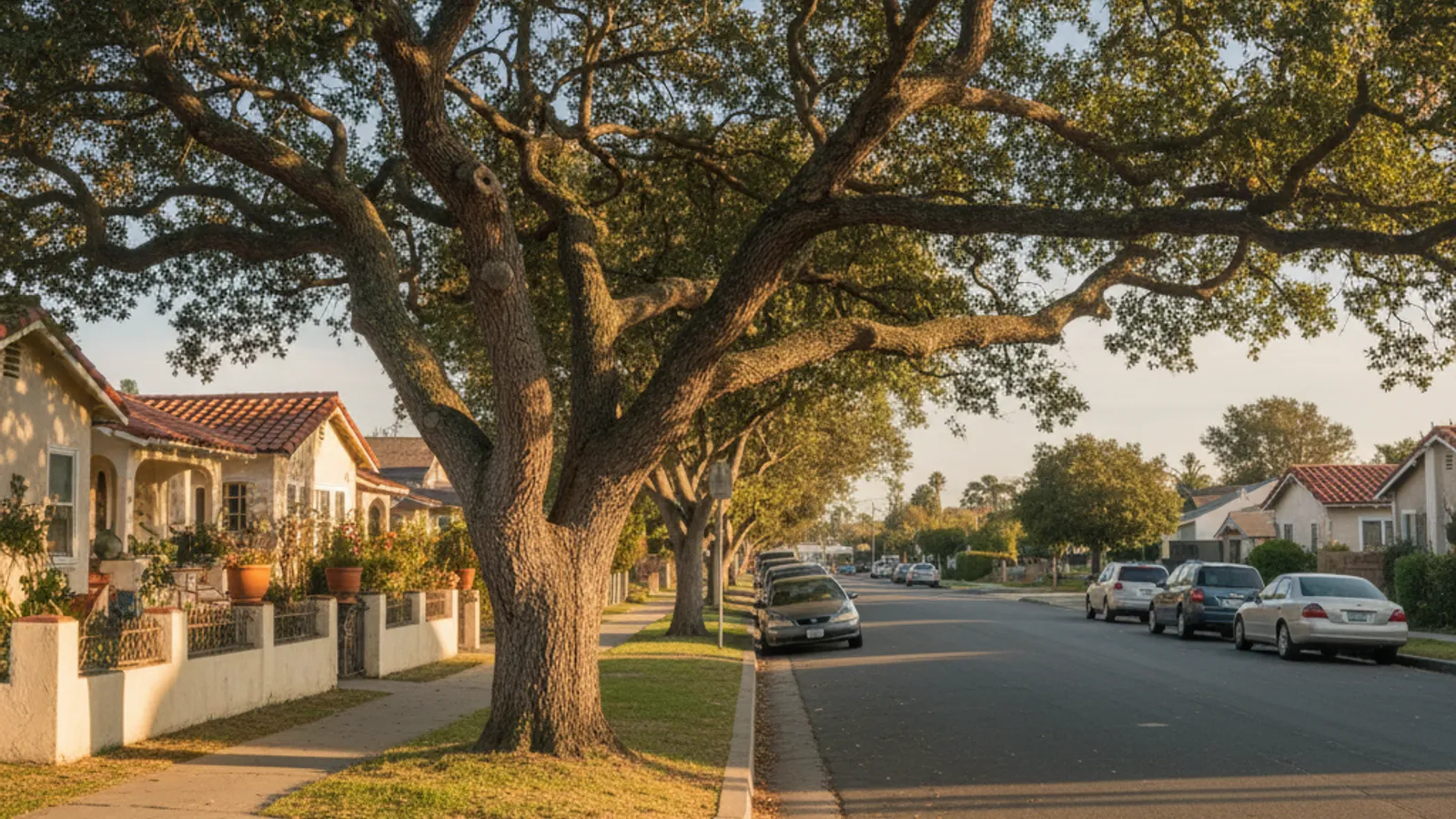
A tree near a City of San Diego curb should be reported and classified before anyone cuts branches, trims roots, or removes it. Report a City-maintained tree through Get It Done. Private work on a street tree requires City inspection and the applicable authorization.
Branch Pro San Diego connects customers with licensed, insured independent providers after the responsible authority approves private work. Branch Pro does not determine ownership, issue permits, or perform tree work. You hire and pay the provider directly.
How do you tell whether the City controls the work?
Start with the exact tree location, parcel jurisdiction, and right-of-way boundary. Ownership alone may not decide who controls trimming or removal.
A tree between the sidewalk and curb may sit within the public right-of-way. A privately owned tree can also affect public space. A San Diego mailing address may fall outside City limits, including in unincorporated county islands described by San Diego County Planning and Development Services.
Use parcel information, a survey, or City confirmation when the boundary is unclear. North Park, Greater Golden Hill, Peninsula, Carmel Valley, and Rancho Bernardo are City of San Diego community planning areas, as shown in the City’s community-plan directory. They do not have separate municipal tree-removal systems.
Report trees in City streets, medians, parks, or other City-controlled areas through Get It Done. Do not authorize cutting based only on where the trunk appears to sit.
What happens after you report a street tree?
Submit the exact location and safe photographs through Get It Done.
The City’s street-tree maintenance page says staff determine immediate safety conditions. Other removal requests are evaluated under Council Policy 200-5. The same page covers No-Fee Permit requests for trimming, removal, planting, and root pruning after City inspection.
Wait for written direction. Confirm whether the City will perform the work or authorize owner-arranged work. Also confirm the approved scope, permit conditions, restoration terms, and who pays each part. The phrase No-Fee Permit refers to the permit, not a promise that private tree work is free.
Follow the instructions tied to the City’s inspection and decision. Confirm the next step, approved scope, permit conditions, and assigned responsibility before arranging private work.
When can a private provider work on a street tree?
A private provider can work only after the City authorizes the stated scope. The inspection and permit process comes first.
Ask the City to identify:
- The tree and approved work
- Who may perform that work
- Required permit documents and conditions
- Replacement or restoration conditions
- Traffic, sidewalk, or right-of-way controls
- Responsibility for each cost
A split branch, root complaint, or private opinion is not automatic permission to remove a street tree. City staff decide how a reported condition is handled.
For a tree near standing overhead conductors, contact SDG&E before arranging private work. If a line is down, keep away and report it to both 911 and SDG&E at 1-800-411-7343, following SDG&E’s downed-line guidance and outage safety instructions. A private quote comes after the electrical hazard and City authority are addressed.
See the emergency tree removal guide for the order of safe actions.
What about a private-yard tree?
First confirm that the parcel is inside City limits and the trunk and proposed work are outside the public right-of-way. Then ask the City whether a development approval, coastal condition, easement, habitat restriction, or active construction project affects the work.
Street-tree rules do not answer every private-parcel question. A private location also does not create a blanket permit requirement. Give the City the parcel, tree location, and proposed scope, then get its answer before hiring regulated work.
See the San Diego tree removal permit guide for the information to take to the correct authority. Do not use the City of San Diego process for another municipality or unincorporated county land.
What if roots are lifting a sidewalk?
Report the exact location and damage through Get It Done. Do not cut street-tree roots or install a barrier before City review. The City’s maintenance process includes root pruning within its inspection and No-Fee Permit path.
Photograph the tree, uplift, nearby utilities, and affected route from a safe place. Ask the City to assign responsibility for tree work, paving, permits, traffic control, and restoration.
A root barrier redirects roots but does not guarantee permanent protection. University of Florida guidance explains that roots can grow below a barrier and return toward the surface, especially where drainage or soil conditions limit deeper growth. Trenching can also injure roots and affect stability, as UC IPM explains.
See tree roots damaging your sidewalk and sewer for separate questions about public paving and private sewer laterals.
How is authorized private removal priced?
The independent provider sets the price for the approved scope. Request a written quote for the actual tree after jurisdiction and authorization are settled.
The quote should address access, structures, utility conflicts, public-space controls, debris, stump work, root work, and final grade. Ask what is excluded and what requires a written change.
For tree work, CSLB describes the C-49 classification. Valid C-61/D-49 holders licensed before January 1, 2024 may retain that classification under CSLB Bulletin 23-07. Verify the actual contractor and appropriate classification through the CSLB license lookup.
See the San Diego tree removal pricing guide for quote-comparison questions. You can also review the tree removal referral service.
Frequently asked questions
Who handles a City of San Diego street tree?
Report it through Get It Done. City staff inspect reported street-tree issues and determine how they are handled. Removal requests outside immediate safety conditions are evaluated under Council Policy 200-5.
Can I remove a parkway tree myself?
Do not proceed without City confirmation. Trimming, removal, planting, and root pruning can require inspection and a No-Fee Permit. The tree’s exact location and right-of-way status matter.
How do I request removal?
Submit the location, condition, and safe photographs through Get It Done. Wait for the City’s inspection and written direction before hiring private work.
Does the City pay for removal?
Payment depends on the path the City assigns. Ask whether the City will perform the work or authorize owner-arranged work, then get responsibility for removal, replacement, traffic control, and restoration in writing.
What if the tree is on private property?
Confirm the parcel jurisdiction, property boundary, right-of-way, and any project conditions. Then ask the responsible planning authority whether the proposed work needs approval.
How long does City removal take?
Follow the case-specific instructions after City inspection. Confirm the next step, approved scope, and responsibility for the work before scheduling a private provider.
What is the short answer?
Identify the tree, parcel jurisdiction, and right-of-way status first. Report a City-maintained tree through Get It Done. Wait for inspection and written authorization before hiring private street-tree work.
For authorized private work, call (858) 400-4423. Branch Pro San Diego will match you with a licensed, insured independent provider. The provider inspects the site and sets the scope, availability, and price. You hire and pay that provider directly.
Who is responsible for trimming a San Diego street tree covers the related trimming process.