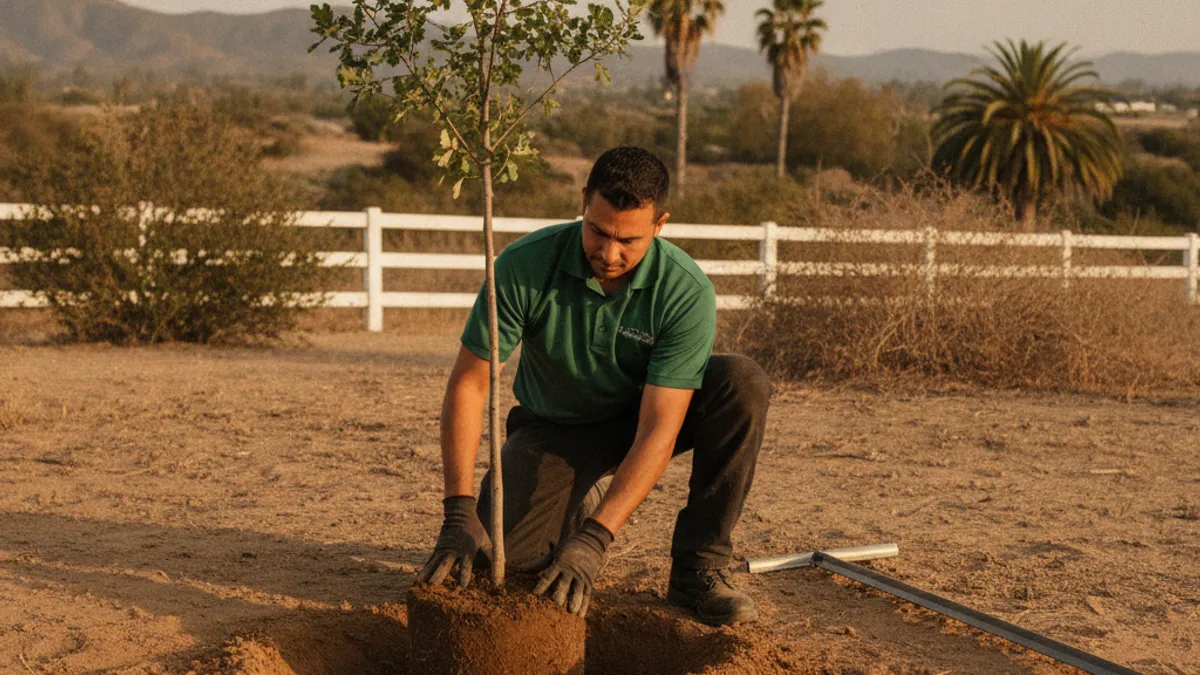
Set the tree by the actual root flare, not the nursery soil line. Dig a wide, shallow hole on firm ground. Backfill with the native soil you took out. Then water the root ball as that tree needs, and check moisture instead of following a calendar.
Branch Pro San Diego is a referral service. We match you with licensed and insured independent local tree professionals. You hire the matched company and pay it directly.
Where should the tree go?
Start with the botanical name and the room it will need at maturity. Check roofs, walls, fences, sidewalks, and overhead SDG&E lines from the ground. A small nursery tree can still outgrow a tight Clairemont parkway. A narrow South Park side yard has the same limit.
Match the species to the actual site. A California sycamore wants moisture and root room. A dry, compacted inland lot is a different match.
If the spot is a City of San Diego street tree or public right-of-way, use the City’s tree maintenance process. Its no-fee permit covers street-tree planting after inspection. A mailing address isn’t the jurisdiction. Lake San Marcos is an unincorporated community under County planning jurisdiction. The City of San Marcos is a separate city. Confirm the parcel before you order stock.
Recorded easements, HOA rules, and native-vegetation limits can also apply. Ask the responsible city or County PDS office about the exact location.
If the mature canopy could reach overhead lines, contact SDG&E before you plant. Don’t treat a round number as a safe planting height. If a line is down, stay away. From a safe place, call 911 and SDG&E at 1-800-411-7343. Don’t go closer after you call. A standing tree or limb near a line goes to SDG&E first. Call 911 for injuries or any immediate threat to people.
What should you do before digging or driving stakes?
Premark the hole and any stake locations. Contact DigAlert and follow its safe-digging steps. DigAlert covers San Diego County. Wait for all responses. Respect the marks.
Utility members mark facilities they own or maintain, often only to the meter. Marks don’t show depth. They don’t locate every private irrigation line, sewer lateral, lighting cable, or other owner-maintained facility. Arrange a separate private locate when those may be in the work area. DigAlert’s homeowner exception is narrow: your own private property, no permit, and no powered equipment.
Don’t trench through existing roots to improve drainage. UC IPM notes that cutting or crushing roots, and compacting soil, can cause delayed decline. Large-root injury can also reduce stability, especially in wet soil.
How deep should you set the tree?
Find the root flare, where the trunk widens into roots. UC IPM planting guidance says to set depth from that flare and from firm ground underneath. Keep the crown at or a little above the surrounding soil. Don’t bury it. Don’t leave roots sitting in air.
The nursery soil line can hide the flare. Brush away extra media until you see the actual crown, then measure the hole from that point.
Make the hole shallow enough that the tree won’t settle deeper after watering. If the bottom is loose, firm it before the tree goes in.
How wide should the hole be?
UC supports a planting area about two to three root-ball widths across. Width matters more than extra depth. New roots need a path into native soil, not a deep, narrow pit.
Watch how water moves in the actual hole. Standing water, compaction, species, and mature space all belong in the decision. UC’s site-preparation page treats drainage and compaction as site facts.
An El Cajon fill pad can hold water differently than an Ocean Beach parkway. Assess that hole.
What soil goes back in the hole?
Put the native soil back. UC finds no consistent benefit from amending a tree’s planting hole with organic matter.
Correct circling or matted container roots while the tree is still in hand. That’s nursery-stock work. It isn’t permission to cut structural roots on a tree already in the landscape.
How should you water a newly planted tree?
Water to settle soil around the ball and to wet the roots you just set. After that, check the root ball itself. A new ball can dry while the surrounding soil still feels damp.
UC irrigation guidance ties frequency and amount to soil, drainage, root depth, season, species, microclimate, and the delivery system. There’s no countywide first-summer calendar. A La Jolla avocado and a Ramona oak need different moisture checks.
Keep the root collar from sitting in a wet well. For later watering of an established tree, UC directs water toward the drip line and away from a soaked trunk base. Follow your water supplier’s rules. Don’t add water to a declining tree until you know the root zone is actually dry. Poor drainage can make extra water harmful.
If you use mulch, keep it off the trunk. Confirm the local fire authority’s rules before piling wood material against a structure.
Our best-time-to-plant guide covers season and stock type in more detail.
When is a good season to plant in San Diego?
Fall through spring can suit many container trees. San Diego Master Gardeners treat fall as a strong season for many native trees. Bare-root deciduous fruit is a different window.
UC’s avocado planting page recommends planting after the last spring frost and before hot weather. Confirm frost exposure on your lot instead of assuming the coast never freezes.
Match the date to the species, stock type, and the care you can actually provide.
Does a newly planted tree need staking?
Only if it’s needed for trunk support or root-ball stability after proper planting. An open, windy lot can need that support. A sheltered courtyard may not.
Stake to hold the tree while roots take hold, not to lock the trunk rigid. Loose, flexible ties should still let the trunk move. Drive stakes outside the ball, and only after DigAlert responses are in and any needed private locates are done. For the support test and removal timing, use how to straighten a leaning tree. Our Santa Ana wind prep guide covers established trees.
Frequently asked questions
What is the best time of year to plant a tree in San Diego?
Fall is a strong window for many native trees. Many container trees can go in from fall through spring when care fits. Avocados follow a frost-and-heat window, not a generic winter date.
How deep should I plant a tree?
Set the root flare at or slightly above finished grade. Make the hole no deeper than needed for that flare to sit on firm soil. Two to three root-ball widths is the useful width.
Do I need to stake a newly planted tree?
Only when it’s needed for trunk support or root-ball stability after proper planting. Use loose ties, allow trunk movement, and remove support once the tree can stand.
How often should I water a newly planted tree?
Check the root ball and the surrounding soil. Water when that ball needs it. Species, weather, drainage, and stock size change the interval.
Do I need permission to plant?
It depends on the exact spot. City of San Diego street trees use the City inspection and no-fee permit path. Other sites may need city, County, easement, or HOA review.
Who marks utilities?
Contact DigAlert before powered digging or stake driving when its rules apply. Member marks usually stop at the meter and don’t show depth. Private lines need their own locate.
When to call us
Call Branch Pro San Diego at (858) 400-4423 if you want a local planting provider. We’ll connect you with a licensed and insured independent company. You’ll review its scope, hire it, and pay it directly.