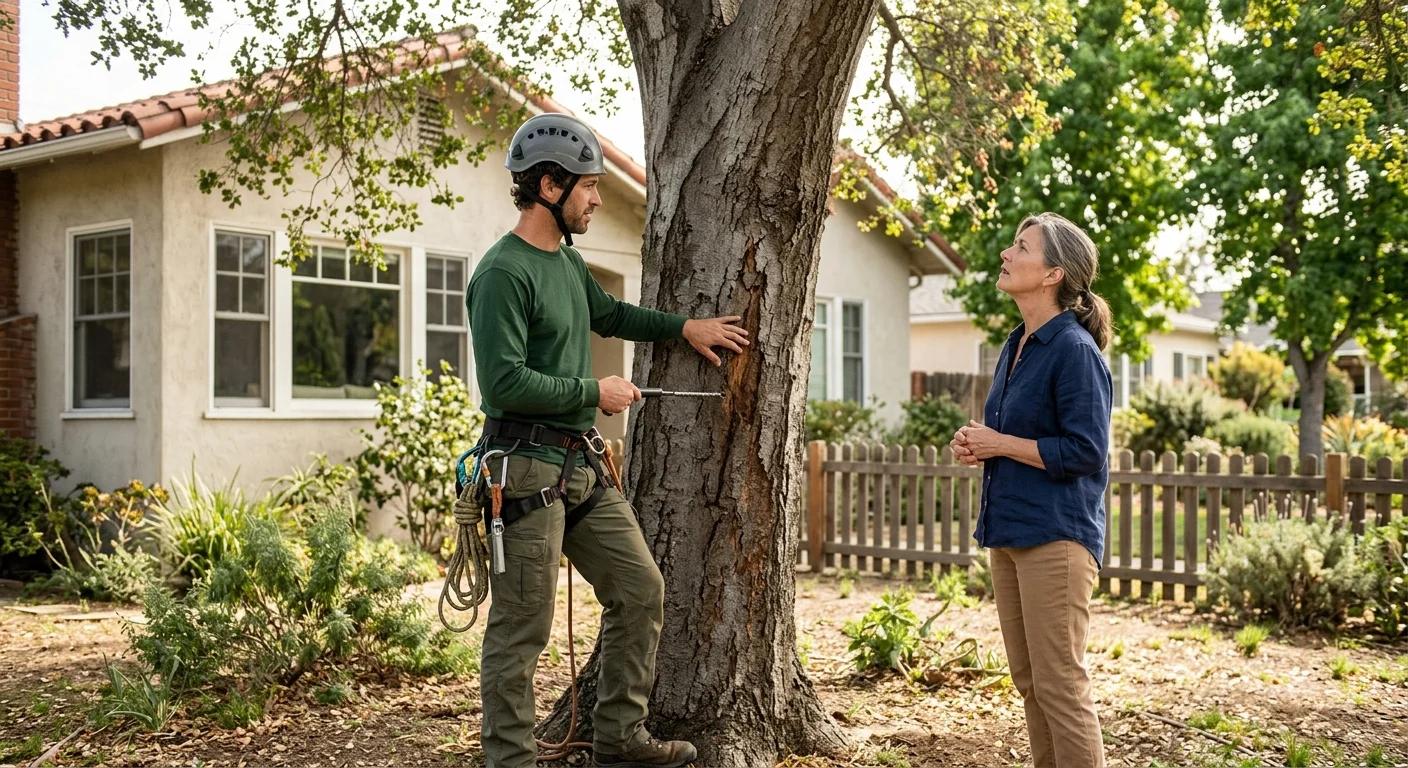
A thinning canopy, peeling bark, or sudden leaf drop can send you looking for a tree doctor. The phrase isn’t a credential. You want an independent professional who can assess the whole tree, explain the findings, and say what should happen next. We connect you with a licensed, insured independent tree company. That company does the assessment. We don’t diagnose the tree.
Define the symptom before the visit
Start with what you can see, not what you think caused it. “My tree is sick” gives a professional little context. “The upper canopy began thinning in July” creates a useful starting point.
Record where the change appears. It may affect one branch, one side, or the full canopy. Note whether leaves changed color, dropped early, curled, or developed visible spots. From a place that’s already safe, photograph bark staining, holes, cracks, loose bark, mushrooms, or exposed roots if you can do that without walking under hanging wood or up to a shifting base. Include a wide photo showing the entire tree and nearby features. If the tree isn’t safely visible, skip the close shots.
Photos can document change and sometimes help a professional identify a pattern. They aren’t a reliable way to confirm the cause on their own. Avoid choosing a treatment from an image or matching one symptom to an online example. Different concerns can look similar from a distance. Species, soil moisture, drainage, and recent site work all change what the same leaf pattern can mean.
On oaks, UC ANR lists crown thinning, bark staining, D-shaped exit holes, and woodpecker injury as possible goldspotted oak borer clues. Coast live oak and California black oak are primary hosts. Those observations still need context. A hole or a thin crown isn’t a home diagnosis, and it isn’t a treatment threshold you should act on yourself.
Our guide to common San Diego tree diseases can help organize what you’ve noticed. If you’re worried about overall decline, compare your notes with these signs a tree may be dying. Neither page replaces an onsite review.
Document watering, pruning, weather, and recent site changes
A useful sick-tree review begins with a timeline. Write down when the tree last appeared normal and when each symptom showed up. Bring dated photos if you have them. Images from previous seasons may show whether the change was sudden or gradual.
Describe how the tree receives water. Identify irrigation heads, drip lines, hand watering, or nearby lawn watering. Note recent leaks, shutoffs, broken emitters, or schedule changes. Don’t add or cut water solely because foliage looks stressed. UC IPM notes that too little and too much water can produce similar decline. Salt injury can look similar too. Check the root zone before changing irrigation.
List recent pruning and other work around the tree. Include approximate dates and the parts affected. Mention root cutting, trenching, paving, grading, fence installation, soil added near the trunk, or vehicle traffic over the root area. Share any products recently applied nearby, but don’t guess at their effect.
Weather timing can help structure the review. Note whether changes appeared after heavy rain, a long dry spell, a Santa Ana wind event, or a broken branch. These details don’t prove a cause. They help the professional compare the symptom with the tree’s recent history.
A tree beside a City Heights driveway may have different constraints from one near a canyon in Scripps Ranch. Our San Diego tree service page can help you request a local match.
Keep the record short and factual. A one-page timeline, several clear photos from safe vantage points, and a list of recent changes will usually communicate more than a proposed diagnosis copied from a search result.
What the root area, trunk, and canopy add to the review
A tree health assessment should extend beyond the most obvious damaged branch. Ask the professional to explain what was reviewed around the visible root area, trunk, major limbs, and canopy. Each observation should connect to the concern you reported.
At ground level, the review may document visible roots, soil changes, irrigation placement, nearby pavement, and recent disturbance. The purpose isn’t to excavate roots without a reason. It’s to record conditions that can be seen and to identify limits on the assessment. Don’t stand at the base of an unstable tree to get a better look.
The trunk review should note visible wounds, cracks, cavities, bark changes, staining, holes, or attachments. On an oak, D-shaped exit holes may warrant a closer discussion because UC identifies them as a characteristic goldspotted oak borer sign. A hole still isn’t a complete diagnosis, and it isn’t a DIY treatment cue.
In the canopy, the professional may document foliage density, dead branches, broken limbs, and where decline appears. Ask whether the pattern is isolated or spread across the crown. If access or visibility limits the review, that limitation belongs in the findings.
The surrounding site matters too. Show drainage paths, structures, utility lines, retaining walls, patios, and recent construction. If someone is hurt, or a tree threatens life or injury, call 911 first. If the tree is near overhead equipment, stay away and call SDG&E from a safe place. A utility call doesn’t authorize anyone to approach the line. If a line is down, stay away and call 911 and SDG&E at 1-800-411-7343. Follow SDG&E’s downed-line guidance. A health discussion isn’t permission to work near energized lines.
A tree health diagnosis consultation can connect these observations into one scope. The independent professional should identify what was inspected, what remained inaccessible, and which findings need more information.
When testing or another specialist may be discussed
Not every visit ends with a final diagnosis. Sometimes the professional may discuss testing, monitoring, or input from another specialist. That doesn’t mean every available test is needed.
Ask what specific question a proposed test is intended to answer. The explanation should identify what would be sampled, where it would go, and how the result could affect the next decision. If those points aren’t clear, ask for them in writing before approving additional work. If the tree is unstable or near a line, specimen collection belongs with the professional, not with a homeowner climbing or cutting a sample.
The same standard applies when another specialist is suggested. Ask what expertise is relevant. “Tree doctor” doesn’t confirm training, certification, licensing, or current status.
The ISA Certified Arborist credential is a professional certification, not a California state license. ISA says it doesn’t authorize someone to conduct business or replace licensing. Confirm the person through ISA’s credential directory. Participation is voluntary, so a missing listing doesn’t disprove a credential. The person can share a digital certificate. That check doesn’t mean every matched worker holds the credential.
California tree contracting uses the C-49 Tree and Palm classification. Existing C-61/D-49 licenses issued before January 1, 2024 may still be active. Before hiring paid tree work, search the business or person through the CSLB license lookup. The record shows classification, status, expiration, bond, and workers’ compensation. Current section 7125 allows a qualifying no-employee exemption for some classes. It excludes D-49. It doesn’t currently list C-49. Confirm how this company staffs the job and resolve any gap with CSLB or the insurer.
Certification and contractor licensing answer different questions. If you need help matching the situation to a professional, request an arborist consultation and verify every claimed credential independently.
What written findings and next steps should explain
A written report isn’t required on every visit. If you need one, agree on that output in writing before the appointment. Look for plain descriptions of what the professional saw, where it appeared, and what couldn’t be confirmed. A useful report doesn’t hide uncertainty behind technical language.
The document should identify the tree as precisely as the professional can support. It should summarize the symptom timeline, visible site conditions, inspected areas, and access limits. Photos should be labeled so you can match each image to its location.
Any diagnosis should explain the supporting observations. If several causes remain possible, the report should say so. It should also state whether testing, monitoring, or another specialist was discussed and why.
Next steps need the same clarity. Ask what action is proposed, which part of the tree it concerns, and what decision that action supports. Don’t accept a vague instruction to treat the tree without a defined scope. You contract with and pay the matched professional directly.
If physical tree work is proposed, request the contractor’s identifying information and verify it through CSLB. For a City of San Diego street tree, trimming, removal, planting, and root pruning go through the City’s no-fee permit request after City inspection. Report City-maintained trees through Get It Done. Start at the City’s street tree maintenance page. Other cities and unincorporated parcels have their own paths. Confirm the parcel jurisdiction before anyone cuts.
If powered digging, root work, or stump grinding is proposed, that work belongs with a qualified contractor. Premark, call DigAlert at 811, wait for all responses, and arrange a separate locate for private lines. Member marks don’t show depth. Don’t excavate around roots yourself.
Keep the findings with your dated photos and maintenance notes. That record gives you a clear basis for comparing future observations, proposals, and professional opinions.
Frequently asked questions
What should I record before a tree doctor visit?
A short timeline, watering and construction notes, and photos taken from a safe place. Don’t approach a split, a hanging limb, or a line to get a better shot.
Do I need a written report every time?
No. Agree in advance if you need written findings. A useful report states observations, limits, and next decisions.
Can photos replace an onsite review?
Photos can document change and sometimes help with identification. They aren’t a reliable way to confirm the cause on their own. Moisture, drainage, species, and site history need to be seen together.
How do I check credentials?
Look up the company on the CSLB site for C-49 or an active legacy D-49. Check an ISA claim against the current credential directory, or ask the person for a digital certificate.
Call when a tree’s condition can’t be understood from a safe place, physical work is proposed, or you need a licensed tree-service match. Call Branch Pro San Diego at (858) 400-4423. We’ll connect you with a licensed, insured independent tree company. You hire and pay that company directly.