Some bark peeling is completely normal for species like sycamore, eucalyptus, and crape myrtle. But bark that’s splitting vertically, peeling in large sheets, or coming away from dead-looking wood underneath usually points to sun damage, cold injury, borers, or a fungal problem. If you’re not sure which one you’re looking at, call an arborist before it gets worse. Reach Branch Pro San Diego at (858) 400-4423 and we’ll take a look.
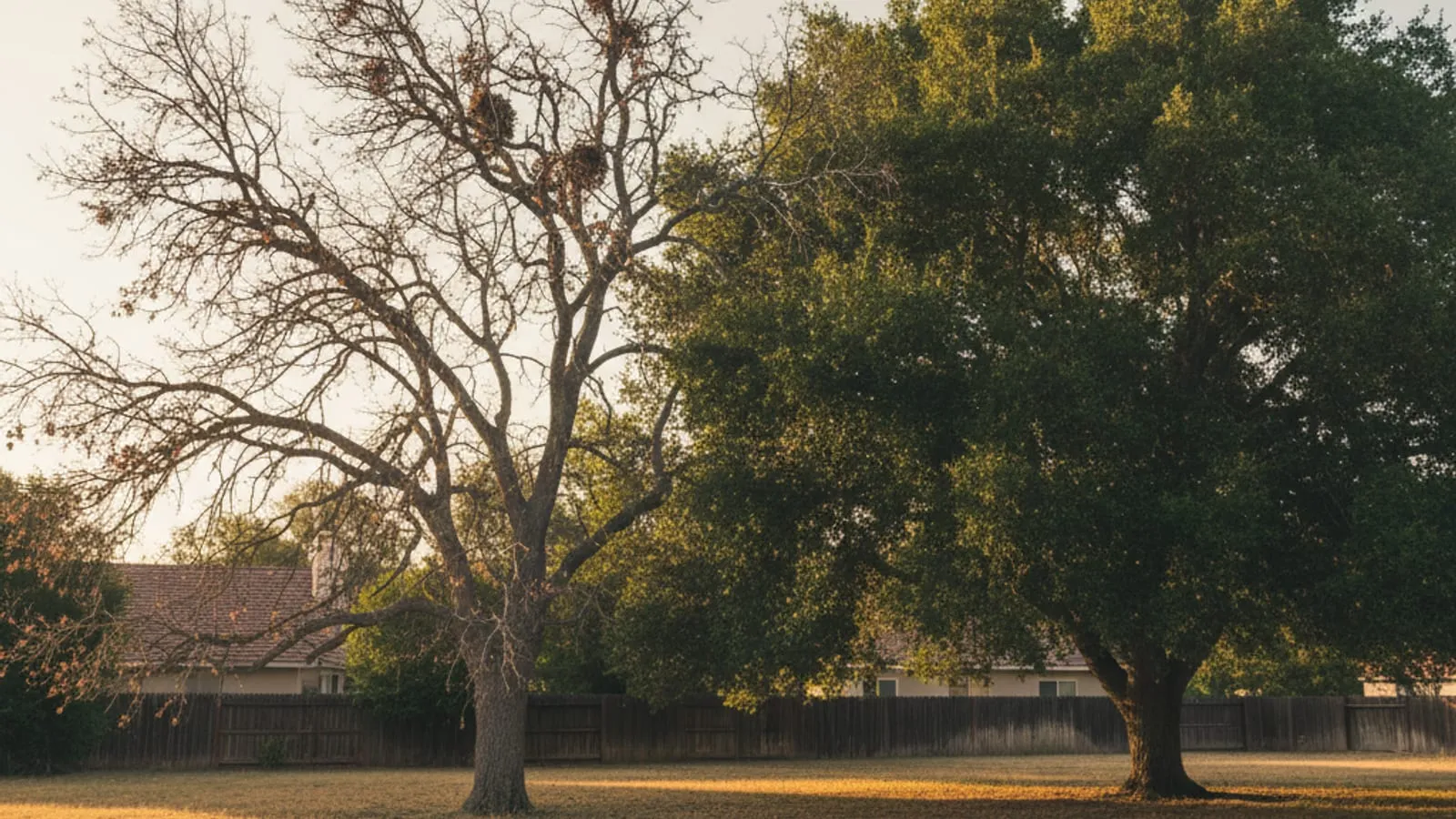
Normal bark shedding vs. bark that’s telling you something’s wrong
Bark is a tree’s skin. Like skin, some of it is supposed to come off. Other times, peeling bark means the tree is hurt underneath and trying to compartmentalize the damage. The trick is knowing which situation you’re in before you decide whether to worry.
Trees that naturally peel (this is fine)
A handful of species common in San Diego yards shed bark as part of normal growth:
- Sycamore: sheds in irregular puzzle-piece patches, revealing lighter, smooth bark underneath. This happens every year and is not a problem.
- Eucalyptus: peels in long ribbons or curls, often seasonally, exposing new bark in tan, gray, or reddish tones.
- Crape myrtle: thin bark flakes off in small strips, showing smooth, mottled bark below.
- Birch and madrone: both naturally exfoliate as the trunk grows.
The giveaway with healthy shedding: the wood underneath looks smooth, moist, and alive, not dry, cracked, or discolored. If your tree is one of these species and the bark underneath looks healthy, you likely don’t need to do anything.
What alarming bark splitting actually means
If your tree isn’t one of the naturally-peeling species, or the bark underneath looks damaged, one of these is probably going on.
Sunscald and sun damage
Thin-barked young trees are vulnerable to sunscald, especially on south- and west-facing trunk sections that catch San Diego’s strong inland afternoon sun. This happens a lot after aggressive trimming removes shade canopy the trunk was relying on, or after a nearby tree comes down and suddenly exposes bark that’s never seen direct sun. The bark discolors, dries out, cracks, and eventually peels away from dead tissue underneath.
Frost cracks in inland valleys
Coastal San Diego rarely sees hard freezes, but inland areas like Julian, Ramona, and Alpine get cold snaps that coastal trees never experience. Rapid temperature swings, especially a sunny day followed by a freezing night, can cause the trunk to crack vertically as wood expands and contracts unevenly. These cracks often reopen in the same spot year after year.
Growth spurts and water stress
A tree that gets a sudden flush of water after a dry stretch, common with San Diego’s irrigation cycles or a wet winter after a drought, can grow faster than its bark can stretch. This causes vertical splitting, usually shallow and not immediately dangerous, but worth monitoring for infection.
Borer damage under the bark
Loose, flaking bark with small round or D-shaped exit holes underneath is a classic sign of wood-boring insects. On oaks, that usually means gold-spotted oak borer. On pines and other conifers, it points to bark beetles. Both pests tunnel under the bark to feed, which cuts off the tree’s ability to move water and nutrients, and the bark above the damage often dies and peels away.
Fungal cankers and dieback
Sunken, discolored patches of bark that crack and peel at the edges, sometimes oozing dark sap, are usually a canker infection. Botryosphaeria dieback is common on stressed San Diego trees, particularly during drought years. Cankers spread slowly but can eventually girdle a limb or the trunk.
Mechanical wounds and mower damage
String trimmers and mower decks chew through bark at the base of the trunk more often than people realize. A wound that never fully heals can peel, crack, and become an entry point for decay fungi. Keep grass and mulch a few inches back from the trunk to avoid this entirely.
When bark damage is a structural hazard
Not every case of peeling bark needs immediate action, but a few situations do. Call for an inspection right away if you see bark peeling off in large sheets over a big section of trunk or limb, especially with beetle exit holes present. Same goes for splitting that runs deep enough to expose dry, dead wood, or damage on a large limb positioned over your house, driveway, or a spot where people walk. These are signs the wood underneath may already be structurally compromised, and a tree health diagnosis can tell you how serious it actually is before you get surprised by a failure.
What to do if you spot bark problems
Start by identifying the species and checking whether it’s a natural shedder. If it’s not, or the wood underneath looks unhealthy, take a photo and note where on the tree the damage is, sun-exposed side, base, or up in the canopy. That location tells an arborist a lot about the likely cause. From there, a certified arborist can core-sample or probe the area, check for hollow spots, and tell you whether the tree needs treatment, pruning to relieve stress, or removal. If you’re already noticing other warning signs alongside the bark, like thinning canopy or dead branches, read our guide on signs your tree is dying for the full picture.
Frequently asked questions
Is it normal for tree bark to peel off?
Yes, for certain species. Sycamore, eucalyptus, crape myrtle, birch, and madrone all shed bark naturally as part of healthy growth. The key is whether the wood underneath looks smooth and alive or dry and damaged.
Can a tree survive with split bark?
Often, yes, especially with shallow splits from sun exposure or a growth spurt. Trees can compartmentalize minor bark wounds over time. Deep splits, large peeling sections, or bark loss combined with borer holes are more serious and need an arborist’s evaluation.
What causes bark to split vertically on a tree trunk?
Usually sudden temperature swings, rapid growth after a wet period, or sunscald on a trunk that lost shade cover from nearby trimming or tree removal. Inland San Diego areas see more frost-crack splitting than coastal neighborhoods.
How do I know if bark peeling is from borers?
Look for small, round or D-shaped holes in the bark near the peeling area, sometimes with sawdust-like frass nearby. Borer damage tends to be localized rather than covering the whole trunk, and it’s common on stressed oaks and pines.
Should I remove peeling bark myself?
Don’t peel or cut away loose bark on your own. It can expose healthy tissue to pests and disease, and it can hide symptoms an arborist needs to see intact to diagnose correctly. Call (858) 400-4423 and let a professional assess it first.