A few brown fronds at the bottom of your palm are usually normal aging, nothing to worry about. Browning or yellowing that spreads upward into the crown, shows up on one side only, or reaches the newest spear leaf is a different story and needs a look fast, since some palm diseases spread to neighboring trees. Call (858) 400-4423 and we’ll tell you straight whether it’s aging, a nutrient issue, or something more serious.
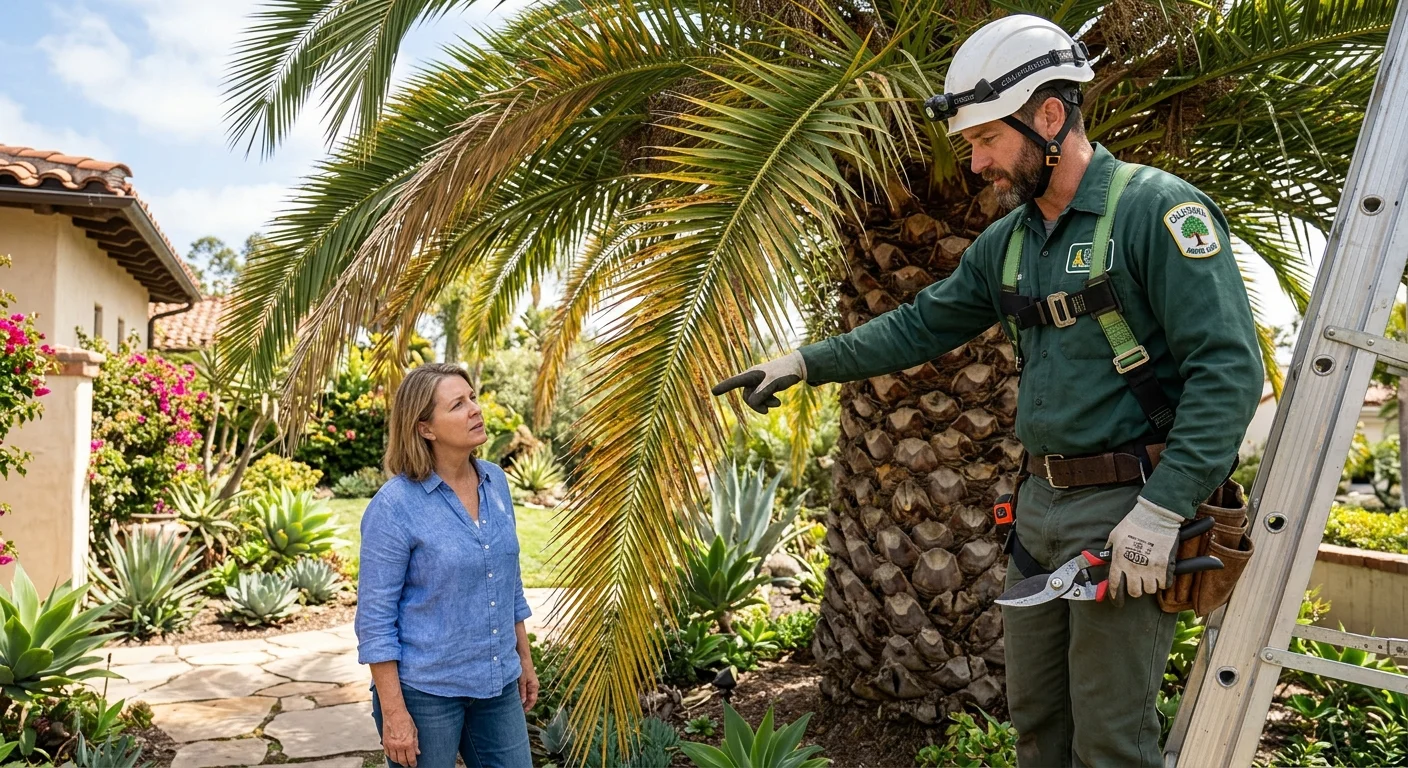
Normal aging vs a real problem
Palms constantly shed their oldest fronds. The lowest, oldest layer of a palm’s crown browns, droops, and eventually drops on its own, and that’s just the tree cycling through growth, not a sign of illness. This is completely normal and happens on healthy palms all over San Diego County.
What’s not normal is discoloration working its way upward into younger, higher fronds, or showing up on the newest spear leaf in the very center of the crown. One-sided browning, where fronds on just one side of the palm die while the other side looks fine, is also a red flag. If any of that describes what you’re seeing, it’s worth getting a diagnosis before it spreads.
Common causes of browning and yellowing in San Diego palms
Overwatering and root rot
San Diego’s clay-heavy soil in some neighborhoods, combined with automatic irrigation systems set to run more than a palm actually needs, is a common recipe for root rot. Standing water around the base suffocates roots, and a palm with damaged roots can’t move nutrients up into the fronds, so you get yellowing and browning even though the tree is technically getting plenty of water.
Underwatering
The flip side happens too, especially on palms planted in fast-draining sandy soil or those that were recently added to a yard without an established irrigation schedule. Underwatered palms often show uniform browning at the tips of fronds across the whole crown, rather than the patchy or one-sided pattern you see with disease.
Nutrient deficiency
This is one of the most common causes in San Diego yards. Potassium deficiency shows up as yellow or orange spotting on older fronds, sometimes with the tips looking scorched. Magnesium deficiency causes yellow banding along the edges of older fronds while the center stays green. Both are correctable with the right fertilizer program, but they need to be caught and identified correctly, not just guessed at.
Fusarium wilt
This one matters a lot if you have a Canary Island date palm. Fusarium wilt is a fungal disease that kills one side of the crown first, fronds on that side die while the opposite side stays green, and there’s often a distinct brown or reddish stripe visible along the rachis (the central rib) of affected fronds. It’s fatal, there’s no cure, and it spreads through contaminated pruning tools. If you suspect fusarium wilt, do not let anyone trim the palm with blades that have touched another Canary Island date palm without sterilizing first. We cover this disease and others in more depth in common palm tree diseases in San Diego.
Pink rot and ganoderma butt rot
Pink rot shows up as spotted, water-soaked discoloration on new growth and can distort emerging fronds. Ganoderma butt rot attacks the base of the trunk and eventually causes the whole crown to decline, often visible as a shelf-like fungal growth low on the trunk. Both are serious enough to warrant a professional look rather than a guess.
Transplant shock, frost, and sunburn
A recently transplanted or relocated palm often browns temporarily while its root system reestablishes, which usually resolves with steady, correct watering. Inland valley areas around Poway and El Cajon see occasional frost that can burn fronds, showing up as a scorched, bleached look rather than yellow spotting. And a palm that’s been trimmed too hard and suddenly exposed to full sun can sunburn on fronds that were previously shaded by the crown.
When over-trimming is the cause
This one is self-inflicted and more common than people expect. Cutting green, healthy fronds off a palm, especially the aggressive “hurricane cut” style that leaves just a tuft at the top, starves the tree. Palms store nutrients in their fronds, and a healthy palm should keep a full, round crown of green growth. Stripping too many green fronds forces the palm to pull reserves from wherever it can, and yellowing often follows within weeks. If a previous trim looks too aggressive, our guide on how to prune a palm tree in San Diego explains what a correct trim actually looks like, and palm tree trimming cost in San Diego covers what a proper job should run.
When to call for a diagnosis
Get someone out quickly if you’re seeing one-sided crown death, a brown stripe on the rachis, discoloration in the newest spear leaf, or a fungal shelf growth at the base of the trunk. These patterns point toward disease rather than normal wear, and with something like fusarium wilt, waiting gives the problem more time to spread to other palms on the property or nearby. Our palm tree service team can look at the pattern in person, and for anything that doesn’t add up to simple aging or a watering issue, our tree health diagnosis service digs into root, soil, and disease causes before recommending treatment or removal.
Frequently asked questions
Is it normal for the bottom fronds on my palm to turn brown?
Yes. Palms naturally shed their oldest, lowest fronds as part of normal growth. As long as the discoloration stays at the bottom and isn’t spreading into younger, higher fronds, it’s not a cause for concern.
What does fusarium wilt look like on a palm?
Fusarium wilt typically kills fronds on one side of the crown first, while the opposite side stays green. Affected fronds often show a brown or reddish stripe along the central rib. It mainly affects Canary Island date palms and has no cure once established.
Can overwatering really turn a palm yellow?
Yes. Too much water, especially in heavier soil, damages roots and prevents the palm from moving nutrients up into its fronds. The result looks a lot like a nutrient deficiency even though the tree is getting plenty of water.
Will fertilizer fix my yellow palm?
It depends on the cause. If yellowing is from a true potassium or magnesium deficiency, the right fertilizer program can correct it over time. If the cause is root rot, disease, or over-trimming, fertilizer alone won’t fix it and can even mask a bigger problem.
How fast do I need to act if I suspect disease?
Fast. Diseases like fusarium wilt and ganoderma butt rot can spread to other palms through contaminated tools or soil, and neither has a cure once established. Call (858) 400-4423 as soon as you notice one-sided browning or a fungal growth at the trunk base so we can assess it before it spreads.