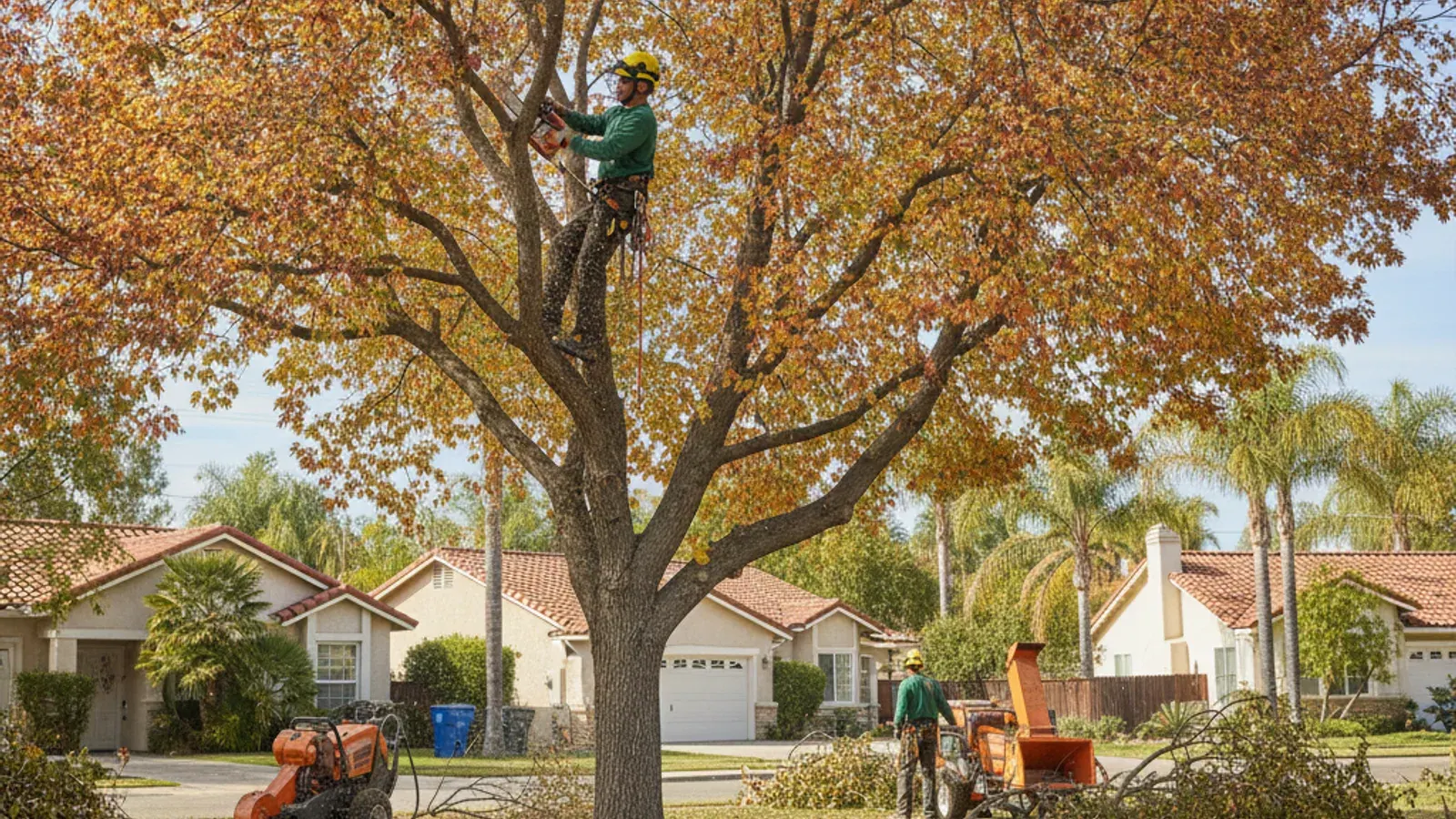
You can see real fall color in San Diego County. The Port of San Diego describes Chinese pistache at Spanish Landing Park West with red and orange autumn foliage. The University of San Diego campus inventory lists Chinese pistache, sweetgum, and crape myrtle among existing plantings. In the mountains, Cuyamaca Rancho State Park names black oak as its main autumn-color tree, often golden yellow. See the park’s current visitor information.
The Port notes the Spanish Landing trees as young, recent plantings. USD’s list is a campus palette drawn from plants already on the grounds. Color timing varies by species, site, and that year’s weather.
Why leaves change color
Leaves turn when chlorophyll fades and other pigments show. The National Weather Service explains fall color as a response to shorter, weaker daylight and seasonal conditions. Frost isn’t required. Sunny days and cool, nonfreezing nights favor brighter color. A hard frost can wither leaves and drop them before they color. Those NWS dates apply to Iowa, Illinois, and Missouri.
Yosemite’s fall-color page explains chlorophyll loss, other pigments showing, and red anthocyanin forming. Some California black oaks hold withered leaves into spring.
Color varies by species, site, and that year’s weather.
Documented local trees
Chinese pistache (Pistacia chinensis). Spanish Landing Park West is a coastal example with red and orange autumn foliage. USD lists the same species in its accents inventory. Young plantings may not put on a mature canopy display.
Sweetgum (Liquidambar styraciflua). USD lists it in street and parking plantings.
Crape myrtle (Lagerstroemia indica). Also on USD’s accents list. It’s deciduous, with fall foliage and bark that shows after leaf drop. See crape myrtle tree care in San Diego.
California black oak. Cuyamaca Rancho State Park treats it as the main autumn-color tree in that mountain park, often golden yellow. Julian is the nearby mountain town if you need local tree help.
Dawn redwood. The Port’s Spanish Landing article also describes deciduous dawn redwood in that planting. That’s another documented deciduous tree on the bay.
California sycamore (Platanus racemosa). USD’s native-plant inventory includes it. Cal Poly’s species profile describes a large deciduous native with lobed leaves, mottled peeling bark, and spherical seed clusters. Leaf drop exposes that bark.
Jacaranda (Jacaranda mimosifolia). The San Diego Zoo plant page documents fernlike foliage and lavender-blue flower clusters, including trees at Fern Canyon Trail and the Safari Park parking lot. Jacaranda is deciduous and does drop leaves. Leaf drop isn’t guaranteed fall color.
USD also lists evergreen pear, so flowering pears don’t all color or drop on one calendar.
Identification still starts with the tree in front of you. How to identify the tree in your San Diego yard is the practical next read when the name isn’t settled.
When early color is worth a closer look
Normal autumn color on a deciduous species isn’t a defect. Early color on one tree, while similar trees nearby stay green, can travel with root injury, construction, compaction, disease, or water stress. UC Cooperative Extension’s Stanislaus note on early fall color frames those as possibilities, not a diagnosis. Its late-October calendar isn’t a San Diego timetable.
Compare the tree with others of the same kind on the property. Note recent grading, irrigation changes, and soil that stays wet or bone-dry. A brown canopy isn’t an automatic instruction to water more. Too little and too much water can look alike. A licensed independent pro can assess root-zone moisture and drainage on that tree. That’s a tree health diagnosis, not a late-fall trimming pass.
Leaf drop isn’t a trimming appointment
Once leaves are down, structure is easier to see: dead wood, cracks, crossing limbs, or weight sitting on one side. That’s an observation window. It isn’t a rule to schedule tree trimming because the calendar says fall.
Santa Ana winds can load any weak wood. Don’t treat leaf drop and wind prep as the same job. If you’re watching exposure before a wind event, use the Santa Ana wind tree prep guide for that separate task.
If a line is down, stay away. Call 911 and SDG&E at 1-800-411-7343 from a safe place. If a standing tree or limb is into overhead lines, call SDG&E first: downed-power-line guidance. Injuries and immediate danger go to 911.
Escondido is an inland city we serve if you need a local crew after you’ve identified the tree and the job. Inland nights can differ from the coast.
Branch Pro San Diego is a referral service. We match you with licensed, insured independent tree service professionals. You hire and pay them directly. ISA certification belongs to a person, not to this brand. Check a C-49 or valid legacy C-61/D-49 on CSLB license search when you hire.
Frequently asked questions
Does San Diego get fall color?
Yes. Chinese pistache at Spanish Landing, USD’s sweetgum and pistache plantings, and Cuyamaca black oak are documented local examples. Timing varies by species, site, and that year’s weather.
Which trees change color in San Diego?
Start with the named examples above. Other deciduous trees drop leaves without a reliable color show. Jacaranda leaf drop isn’t the same as pistache red and orange.
When is the best time to see fall color in San Diego?
Species, site, and weather set the timing. Check the actual trees that year rather than a borrowed calendar.
Are bare branches in winter normal here?
For deciduous species, yes. That’s dormancy, not automatic decline. If an evergreen is shedding, or a deciduous tree looks cracked, one-sided, or off-schedule next to its neighbors, that’s worth an assessment.
Does fall color mean I should trim the tree?
No. Color and leaf drop aren’t a trimming trigger. Use them to see structure. Define a cut only if there’s dead or broken wood, a clearance the fire authority requires, or another named objective.
Are jacaranda trees deciduous?
Yes. They drop leaves in the cooler months. That leaf-drop period isn’t a promise of fall color.
If the site is clear of lines and you want a licensed independent crew for a defined job, call Branch Pro San Diego at (858) 400-4423.