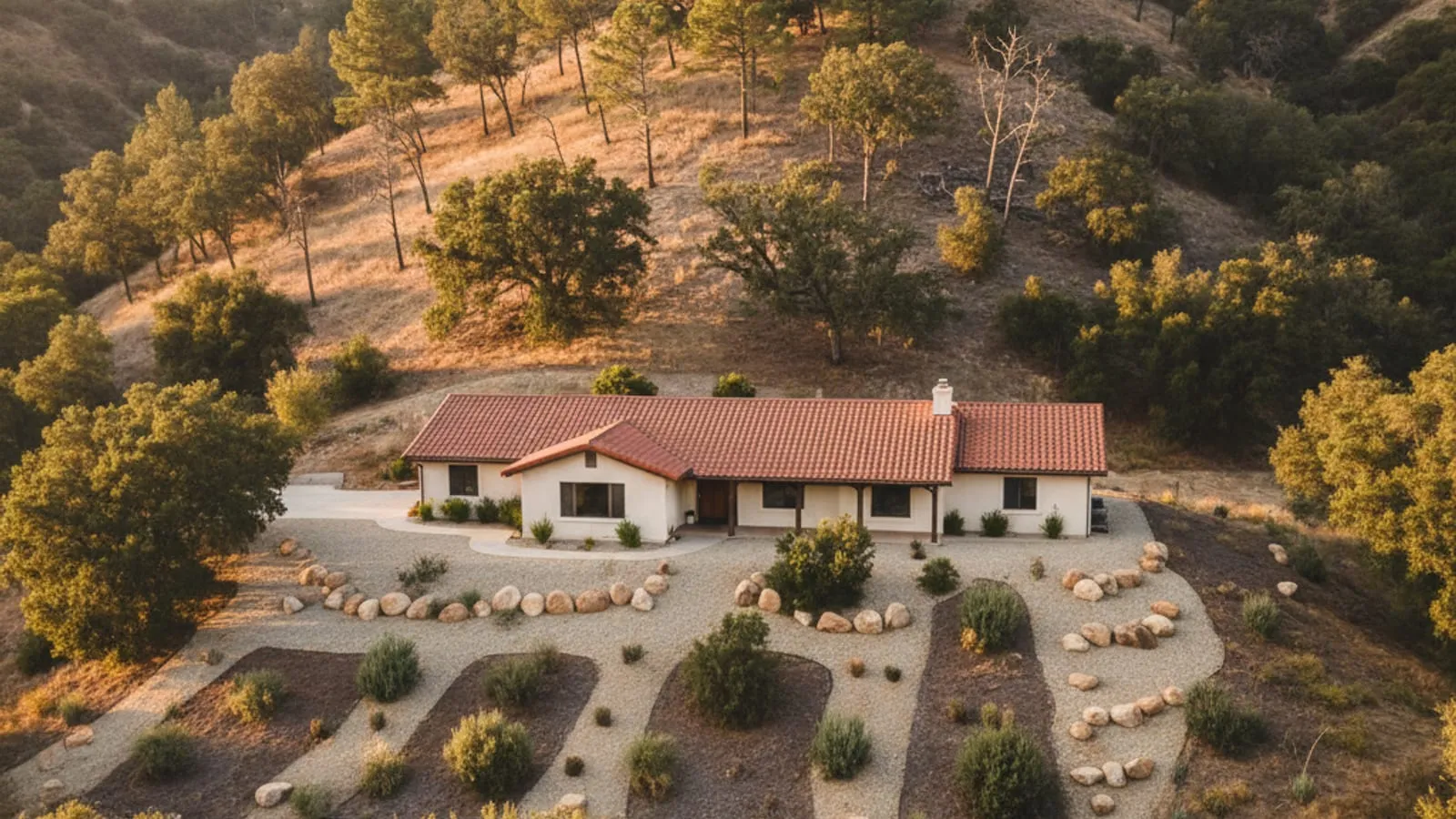
San Diego defensible space rules must be checked by address. State responsibility, local hazard designations, municipal rules, and the responsible fire authority can change what applies to a parcel.
The current public guidance describes areas from the structure outward. It doesn’t support treating every San Diego County property as subject to one identical checklist.
Which authority sets the requirements for an address?
Start with the authority responsible for the property. Ask whether the address falls within a State Responsibility Area, a designated local fire-hazard area, or another jurisdiction with its own requirements.
Request the current written standard or inspection checklist. This is more reliable than applying a diagram from another city or assuming that every inland address follows the same rule.
Before tree or brush work begins, confirm:
- Which authority has jurisdiction
- Which structures establish the measurement point
- How the property boundary limits the work area
- Whether local requirements add to state guidance
- Whether any permit or inspection step applies to the proposed work
A contractor can prepare a work scope, but the contractor doesn’t decide which law governs the parcel.
What do Zone 1 and Zone 2 mean?
The California Board of Forestry and Fire Protection identifies Zone 1 as the area from 5 to 30 feet from a structure. Its public guidance identifies Zone 2 as 30 to 100 feet, ending at the property line when that line is closer.
Those distances describe where work is evaluated. They don’t mean every tree inside a zone must be removed.
Within an actual parcel scope, separate:
- Dead material from living vegetation
- Ground brush from mature-tree work
- Vegetation that stays from vegetation selected for removal
- Tree pruning from whole-tree removal
- Private property from land beyond the boundary
This distinction matters on small lots, canyon edges, slopes, and parcels where the stated distance crosses a property line.
Is Zone 0 already a universal vegetation-removal rule?
As of September 5, 2026, the Board of Forestry page describes the first five feet as the ember-resistant zone and links August 2026 rulemaking materials. Those materials don’t establish a universal requirement currently enforced on every California parcel.
Ask the responsible fire authority what applies to the address today. A city, fire district, or another authority may have its own requirement for the property.
How should trees be handled within defensible space?
A zone measurement doesn’t diagnose a tree. The appropriate task may involve nearby brush, dead material, selective pruning, or removal. Tree condition, canopy position, slope, and retained vegetation all affect that decision.
Avoid converting general spacing guidance into automatic topping, severe canopy stripping, or removal of every tree near a structure. The ISA’s mature-tree pruning guidance says each pruning cut should serve a purpose. It also cautions that mature trees generally need less foliage removal.
The work scope should identify each affected tree and answer:
- What condition or rule is the work addressing?
- Is ground vegetation the issue, or is tree work required?
- What live canopy will remain?
- Does the authority require a specific clearance at this address?
- Is the tree on private property or within another jurisdiction?
Work near energized lines belongs with the utility or properly authorized personnel. Don’t treat line-clearance work as ordinary homeowner pruning.
Does finishing the work guarantee an inspection result?
No. A contractor’s completed scope doesn’t guarantee approval by a fire authority. It also doesn’t guarantee that an insurer will accept the work or renew a policy.
If an inspection notice exists, use its exact items when requesting a quote. Ask the issuing authority how corrections will be reviewed. If insurance is the concern, ask the insurer what records it accepts before paying for documentation that may not meet its process.
Keep the contract and any records the authority or insurer specifically requests. Don’t assume that photos, an invoice, or a contractor credential replaces their review.
What changes the cost of the work?
Ask contractors to price the same written parcel scope. Important factors include brush extent and density, separate tree work, slope, equipment access, retained vegetation, obstacles, material staging, and hauling.
Our East County defensible space cost guide explains how those conditions shape the scope and quote.
Larger mixed-use or grove-edge parcels need a different plan from a compact residential lot. See defensible space planning for North County for orchard and residential-edge distinctions.
When should a tree professional be involved?
Ground-level cleanup and large-tree work carry different risks. Bring in a qualified tree professional when the scope involves mature-tree pruning, tree removal, powered cutting above ground, unstable material, or work that could affect established roots.
Branch Pro San Diego connects customers with licensed and insured independent local tree service professionals. Verify the matched contractor through the California Contractors State License Board, then confirm the parcel requirements with the responsible fire authority.
Call (858) 400-4423 to get connected with a pro for tree trimming, tree removal, or land clearing.