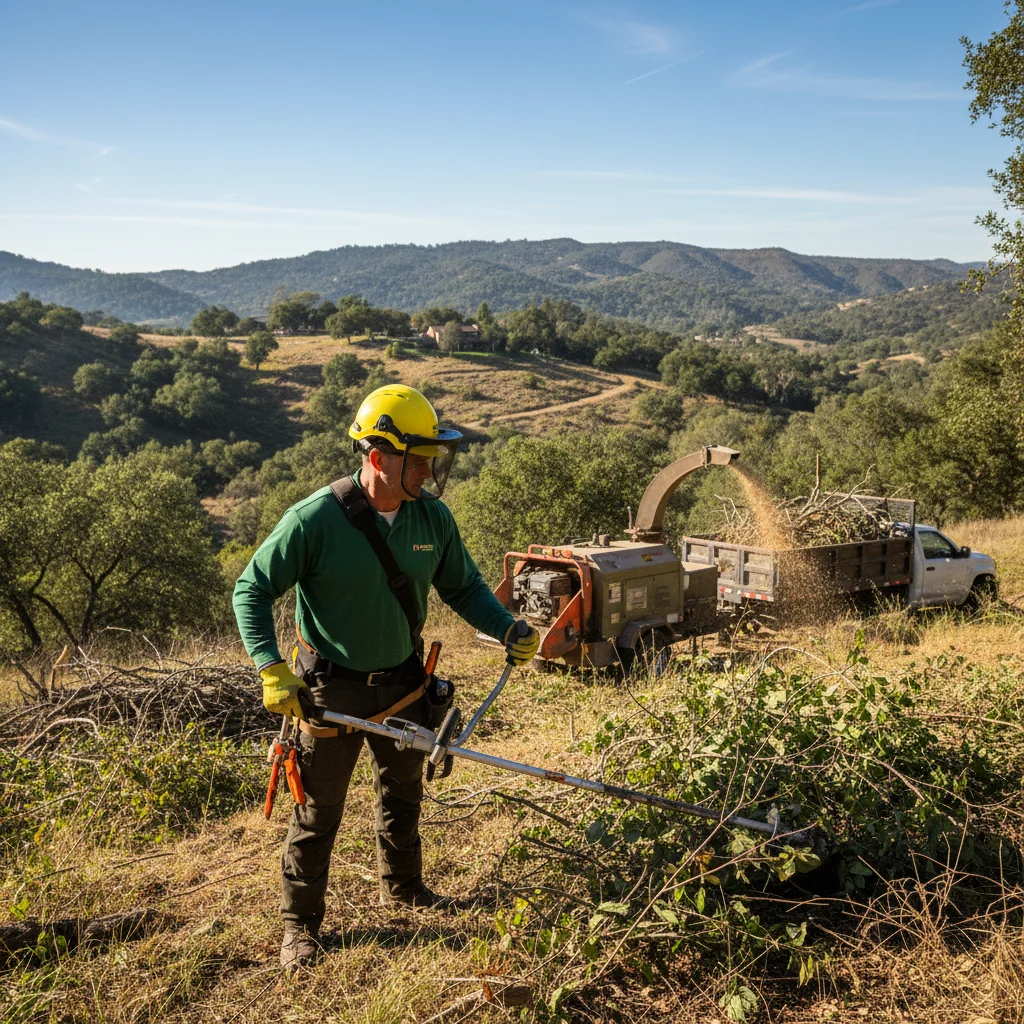
Defensible space clearing costs in Alpine, Ramona, and Jamul depend on the actual parcel. Brush extent, tree work, slope, access, retained vegetation, obstacles, and material handling all change the scope.
Ask each contractor to price the same written scope for the parcel. The scope should identify the work area, vegetation, separate tree work, access, obstacles, material handling, and hauling.
How much vegetation is inside the work area?
Parcel size alone doesn’t describe the job. An acre with a narrow brush band differs from an acre where dense vegetation reaches every boundary.
The estimate should map the area that needs work. It should distinguish light ground vegetation from dense woody brush. It should also identify vegetation that stays. Cutting everything isn’t the same assignment as reducing selected fuel while retaining trees and screening plants.
Ask the contractor to mark:
- The limits of the clearing area
- Patches of dense brush and lighter ground growth
- Dead material that needs separate handling
- Live trees and shrubs that will remain
- Areas excluded by a property line or another site condition
This turns an acreage figure into a measurable scope.
Is tree work included with brush clearing?
Brush clearing and tree work aren’t interchangeable. Ground vegetation may be cut or reduced without altering a mature tree. Pruning, removing, or rigging a tree requires a separate decision and work plan.
A quote should separate these tasks:
- Ground-level grass or brush work
- Selective shrub reduction
- Tree pruning
- Tree removal
- Stump work, if requested
- Processing or hauling the resulting material
This separation protects healthy retained trees from being treated as brush. It also makes it clear whether a tree recommendation addresses deadwood, spacing, access, structural condition, or removal.
For the rules behind the work area, use our San Diego defensible space guide. The applicable fire authority should confirm the current requirements for the address.
How do slope and equipment access change the scope?
A slope affects how people, tools, and cut material move across the parcel. The grade alone isn’t the whole issue. Surface conditions, rocks, terraces, drainage features, and drop-offs can limit the usable route.
Equipment access should be measured, not assumed. A truck may reach the road but not the work area. Gates, narrow driveways, retaining walls, septic components, fences, and overhead lines can block or restrict a route.
If equipment can’t reach the vegetation, material may need to be carried to a staging point. That changes labor and handling. Ask the contractor to identify the proposed access route and staging area before comparing prices.
What vegetation needs to remain?
A defensible space plan can retain selected live vegetation while addressing dead material and fuel continuity. Retention takes planning because the crew must work around trunks, irrigation, roots, fences, and planted areas.
List retained trees and shrubs in the proposal. For each mature tree, state whether the work is limited to nearby brush, deadwood, selected pruning, or removal. Avoid a vague instruction such as “clear the hillside” when part of the living landscape should remain.
Existing shade trees may also affect how brush is reached and removed. The work method should avoid unnecessary root disturbance or soil compaction near retained trees.
How will cut material leave the property?
Material handling can be a major part of the scope. Brush may need to be moved from a slope, passed through a gate, staged near a driveway, processed where access allows, or hauled away.
Don’t assume every contractor will use the same equipment or disposal method. Ask for these items in writing:
- Where material will be staged
- Whether it will be processed on site or hauled unprocessed
- Whether chips or wood will remain on the property
- Which access route will be used
- What obstacles must be protected or worked around
The plan should also address large wood separately from fine brush. A trunk section, woody shrub mass, and dry ground material create different handling needs.
Why can two nearby parcels receive different quotes?
Two properties with the same acreage can have different working areas, vegetation density, slopes, access routes, and tree needs. One may allow equipment close to the work. Another may require hand movement around walls or planted areas.
A previous clearing also doesn’t prove the next visit will have a fixed discount. Regrowth, fallen material, new obstacles, retained vegetation, and a changed boundary can alter the assignment. Each quote should describe current conditions rather than rely on a universal maintenance formula.
What should an East County clearing quote show?
A useful quote should identify the parcel area being treated and the vegetation involved. It should separate brush work from tree work and explain access, staging, retention, and hauling.
Before hiring, verify the contractor through the California Contractors State License Board. Ask whether the classification and insurance information are appropriate for the proposed work.
Branch Pro San Diego connects customers with licensed and insured independent local tree service professionals. Call (858) 400-4423 to discuss a parcel in Alpine, Ramona, Jamul, or another East County community.
For a broader acreage project, see land clearing and what changes its cost in San Diego.