Olive tree trimming in San Diego runs $300 to $650 per tree, and full removal runs $450 to $1,200. Where you land in either range depends on the tree’s size, how many trunks it has, and whether it’s a fruiting variety dropping olives onto a patio or driveway. Stump grinding, if you go the removal route, is a separate add-on at $150 to $350. Call (858) 400-4423 for a same-day estimate.
Olive trees are everywhere in San Diego, from Rancho Santa Fe estate driveways to 1970s Clairemont front yards, because they thrive in our dry, mild climate without much water. Most of the national advice on olive trees is written for California’s Central Valley olive oil industry: acres of orchard rows, harvest equipment, and irrigation schedules. None of that applies to a single ornamental olive planted 15 feet from your front door. Here’s what actually drives the price and the decisions for a San Diego yard.
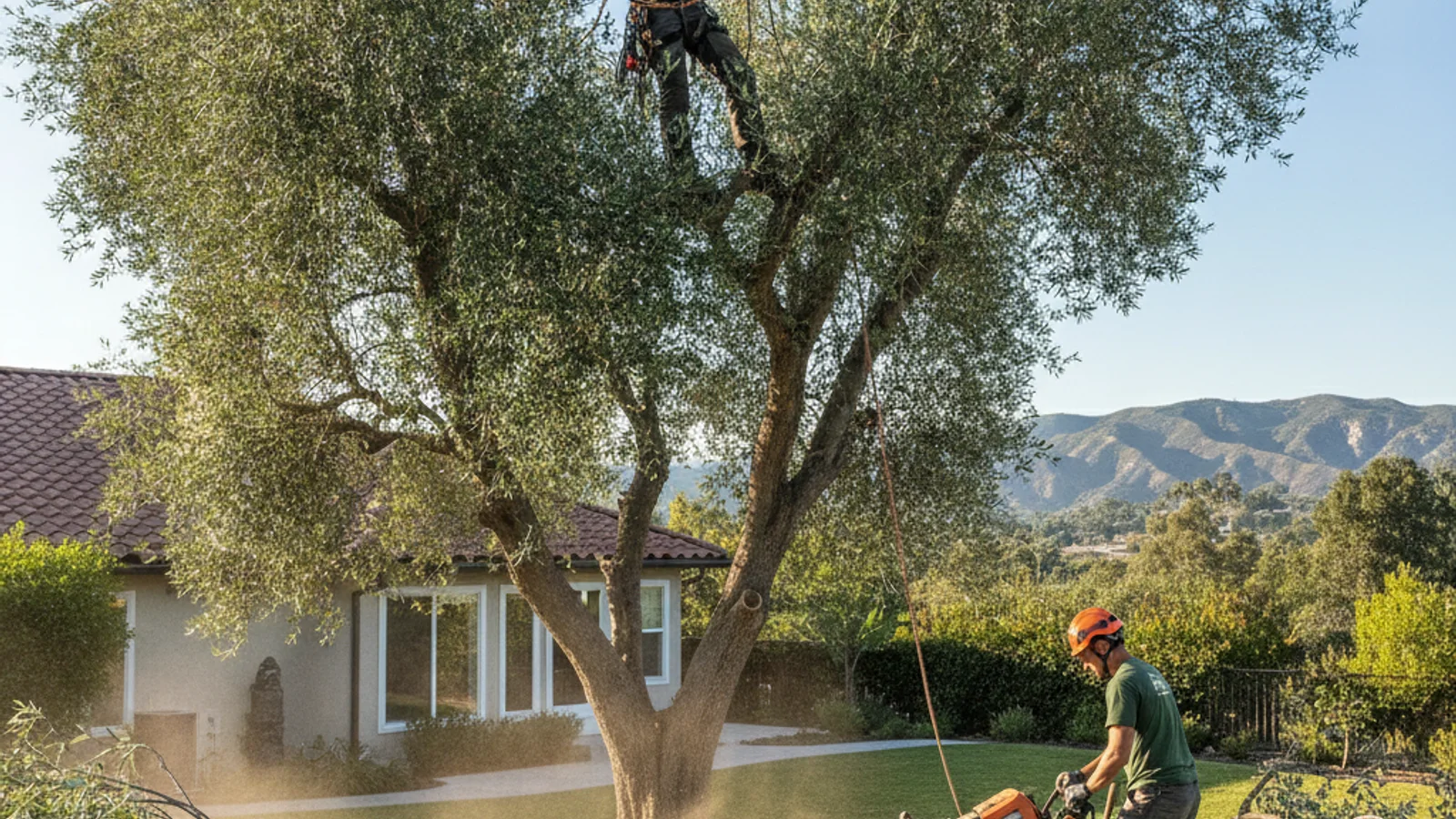
Olive tree trimming cost in San Diego
Olive trees rarely get very tall on their own, usually 15 to 30 feet, but they grow dense, multi-trunk canopies that need real structural work, not just a quick shape-up.
- Young or small tree (under 12 ft): $200 to $350. Basic shaping and deadwood removal on a tree still being trained.
- Established tree (12 to 25 ft): $350 to $550. The most common San Diego yard olive. Canopy thinning, suckering cleanup, and crossing-branch removal.
- Large, multi-trunk specimen (25 ft+): $550 to $650. Old estate or street-corner trees with heavy, wide canopies that take a full crew day.
Two things push an olive trim toward the higher end of any tier: how long it’s been since the last pruning, and how many suckers have grown up from the base and root zone. Olives sucker aggressively compared to most ornamental trees in San Diego yards, and a tree that’s gone three or four years without attention often needs as much time removing suckers as it does shaping the canopy. For a broader look at how trimming pricing works across species, see our tree trimming cost guide for San Diego.
Olive tree removal cost: when trimming isn’t enough
Removal makes sense when a tree is declining, structurally unsound, or simply in the wrong spot, planted too close to a foundation or driveway decades ago.
| Tree size | Removal cost | Stump grinding add-on |
|---|---|---|
| Under 15 ft | $450 to $650 | $125 to $200 |
| 15 to 25 ft | $650 to $950 | $200 to $300 |
| 25 ft+, multi-trunk | $950 to $1,200 | $300 to $350 |
Multi-trunk olives cost more to remove than a single-trunk tree of the same overall height, because each trunk has to be cut and rigged down separately to avoid damaging whatever’s underneath, often a walkway, low wall, or parked car. If you’re weighing removal against other options for a struggling tree, our general tree removal pricing guide covers how species and access affect cost across the board. For the full scope of what our crews handle, see tree pruning, tree removal, and stump grinding.
Why fruiting olive trees create real problems in San Diego yards
This is the part most homeowners don’t find out until it’s a problem. A mature fruiting olive drops hundreds of small, oily fruits every fall. Once they hit a driveway, patio, or sidewalk and get crushed underfoot, the oil in the skin turns the surface genuinely slippery, and the flesh stains light-colored concrete and pavers a dark purple-brown that doesn’t wash off easily. On a property with foot traffic, that’s a real slip-and-fall liability, not just a cleanup chore.
This is exactly why so many San Diego HOAs, property managers, and commercial landscapes specify non-fruiting olive cultivars for new plantings, varieties like ‘Wilsonii’, ‘Swan Hill’, or the dwarf ‘Little Ollie’ that flower but set little to no fruit. If your property has an older fruiting olive planted before that became common practice, you generally have three options: live with the annual cleanup, have the tree treated with a fruit-reduction spray before bloom (a seasonal, recurring cost, not a one-time fix), or remove it and replace it with a fruitless variety. For HOA-managed properties specifically, see our HOA tree service guide for how these decisions typically get made and paid for.
Should you remove or replace a fruiting olive tree?
| Situation | Best option |
|---|---|
| Healthy tree, fruit mess is the only issue | Keep it, add annual fruit-reduction treatment before spring bloom |
| Healthy tree, no tolerance for any fruit drop | Remove and replant a fruitless cultivar like ‘Swan Hill’ |
| Declining, hollow, or storm-damaged trunk | Remove; olives with trunk decay are not good candidates for cabling |
| Planted too close to a foundation, pool, or driveway | Remove; roots on mature olives spread wide and shallow |
Olives are also one of the more drought-tough trees you can plant in San Diego, which is part of why they were planted so widely in the first place. If you’re removing one and want a low-water replacement that won’t create the same fruit-drop problem, our guide to drought-tolerant trees for San Diego covers several good options, including fruitless olive cultivars themselves.
When to prune an olive tree in San Diego
Late winter, from December through February, is the right window. Olives set next season’s fruit on the prior year’s growth, so pruning right after the fruiting season and before spring bloom shapes the canopy without accidentally stripping the next harvest. Pruning during San Diego’s wetter months also lowers the risk of Verticillium wilt, a soil-borne fungus that can infect olives through fresh pruning wounds when conditions are damp for extended periods. A trim done in the middle of a dry San Diego summer carries less of that specific risk, but it does mean fighting the tree’s active growth. If your olive hasn’t been touched in a few years, get it looked at before waiting for the “ideal” window. A structurally unsound canopy is a bigger risk than pruning slightly off-season.
Call (858) 400-4423 for a free, on-site estimate on trimming, removal, or fruitless-variety replacement.
Frequently asked questions
How much does it cost to trim an olive tree in San Diego?
Most established San Diego olive trees, 12 to 25 feet tall, cost $350 to $550 to trim. Smaller young trees run $200 to $350, and large multi-trunk specimens can reach $650. The biggest cost driver besides size is how long it’s been since the last trim, since suckers and deadwood pile up fast on a neglected olive.
Why does my olive tree make such a mess every fall?
A fruiting olive drops hundreds of small fruits over several weeks. Once crushed on a hard surface, the oily flesh makes the spot slippery and stains light concrete or pavers. This is a normal trait of fruiting cultivars, not a sign of a sick tree, and it’s the single biggest reason homeowners ask about removal or replacement.
Can I replace a fruiting olive with a non-fruiting one instead of just removing it?
Yes, and it’s often the better call if the tree itself is otherwise healthy. Fruitless cultivars like ‘Wilsonii’, ‘Swan Hill’, or the dwarf ‘Little Ollie’ give you the same drought-tough, silvery Mediterranean look without the annual fruit-drop cleanup. Removal and replacement together typically cost close to what a standalone removal runs, since the new tree is a minor add-on.
Do San Diego HOAs require fruitless olive trees?
Many HOAs and commercial property managers specify fruitless cultivars for common-area and street-facing plantings specifically to avoid the slip hazard and staining from dropped fruit. Requirements vary by community, so check your HOA’s landscape guidelines, or ask your property manager, before removing or replacing an olive on shared property.
What’s the best time of year to prune an olive tree?
December through February, after fruiting and before spring bloom, is the standard window in San Diego. It shapes the canopy without cutting off next season’s flowers, and pruning during the cooler, wetter months lowers infection risk from Verticillium wilt compared to fresh cuts in the heat of summer.