Walnut tree removal in San Diego costs $700 to $3,500, depending on the tree’s height, the density of the canopy, and whether you need stump grinding afterward. Most homeowners pay between $1,000 and $2,200 to have a mature walnut removed. Trimming runs lower, typically $400 to $1,200, but the real cost comes when walnut roots start lifting driveways or the tree is growing too close to the house.
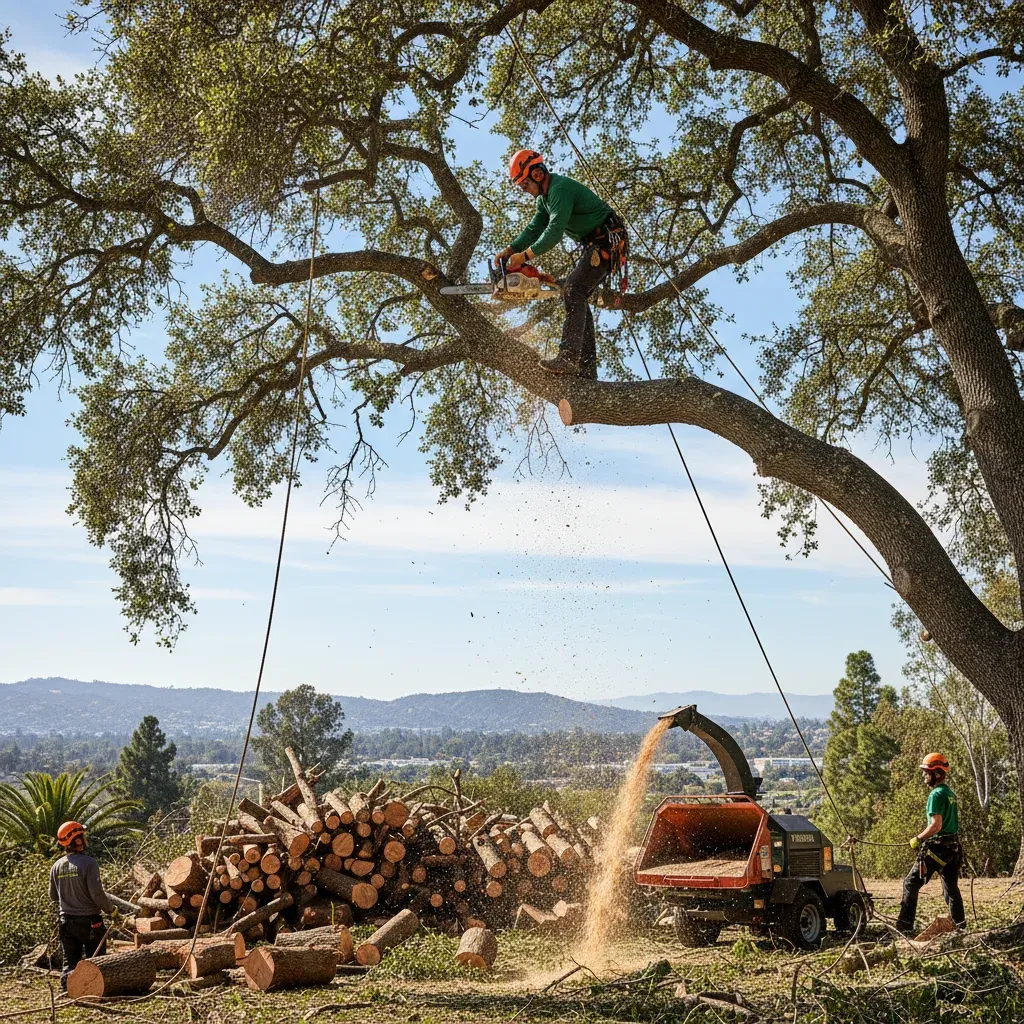
Why walnut removal costs what it does
Walnut trees are heavier and messier to remove than many San Diego species, which drives the price. The wood is dense and hard on equipment. The canopy drops walnut hulls for weeks, creating stains on anything below. And the roots, once they’re big, become a plumbing and foundation problem that simple trimming won’t solve.
Removal cost by size
A certified arborist prices walnut removal by height, because taller trees take longer to climb safely and create more debris.
Small (under 25 ft): $700 to $1,200. Young walnuts or smaller side trees in a multi-tree property.
Medium (25 to 40 ft): $1,200 to $2,000. Established walnuts that are starting to shade out a lot of the yard or drop hulls near the house.
Large (40 to 60 ft): $2,000 to $3,200. Mature walnuts with wide canopy spread, usually the reason for the removal call.
Very large (60 ft and over): $3,200 to $3,500. Rare in residential San Diego yards, but old ranch properties in North County Inland and East County sometimes carry them. Crane work likely adds $1,000 to $1,500.
The real cost driver: roots and stumps
Walnut roots are aggressive and spread wide, far beyond the canopy line. Once they’re big, they crack driveways, heave patios, and can undermine foundations. Removal itself is the easy part. Stump grinding adds $300 to $600 more, and many owners pair it with a root treatment to kill regrowth chemicals for another $150 to $300.
Cost by reason for removal
| Reason | Typical cost | Why |
|---|---|---|
| Overgrown, shading house | $1,000–$2,200 | Size and canopy density, but good access |
| Walnut hulls staining hardscape | $800–$1,500 | Usually medium-size tree, cleanup work included |
| Roots lifting driveway or patio | $1,200–$2,500 | Large tree, plus root cutting and hardscape repair estimate |
| Dead or hazardous branch | $600–$1,400 | Smaller removal or major trim, depends on extent |
| Close to house or pool | $1,500–$3,200 | Extra rigging and crew size for safety and protection |
Keep vs. remove decision
A few questions before you commit:
Is the tree dropping walnut hulls on your patio or pool? Trimming won’t stop it. The hulls are the fruit developing inside, so a full crown trim reduces the mess slightly but never eliminates it. If the hulls are a real problem, removal is the cleaner answer.
Are the roots cracking concrete? That’s different. Root barriers can slow damage for a few years, but once roots are this aggressive, they usually win. Removal, stump grinding, and root treatment is the long-term answer.
Is the tree healthy and far from the house? Then it’s probably worth keeping. Walnut trees provide real shade, and if they’re not actively damaging anything, removal costs more than living with them.
Is it blocking a view or creating too much afternoon shade? Trimming can help. A certified arborist can thin the crown to open it up without removing the whole tree, typically for $400 to $800.
Trimming vs. removal
Walnut trimming costs less upfront but has limits on what it can solve.
Trimming works for:
- Opening up a dense crown to let more light through
- Removing dead branches or branches over the roof
- Reducing the mess of walnut hulls by 20 to 30 percent
- Typical cost: $400 to $1,200 depending on crown size and branching structure
Removal makes sense when:
- Roots have cracked or lifted hardscape and won’t stop growing
- The tree is dead, dying, or genuinely hazardous
- It’s too close to the house for safe trimming
- Walnut hulls are a persistent problem
- You need the space for a new project
San Diego walnut specifics
Walnuts grow well across San Diego County, but they’re most common in North County Inland and East County, where older ranch properties and estates often carry them. Coastal neighborhoods rarely have them because they prefer inland climate and full sun.
Black walnut, the native Eastern species, is rare in San Diego yards. Most residential walnuts are California walnut (Juglans californica), a smaller native species, or English walnut (Juglans regia), planted for nut production. Either way, removal costs are the same.
One caveat: walnut trees produce a chemical called juglone that can inhibit growth of nearby plants and grass. If you’re planting something new after removal, that’s worth knowing. Most of the juglone breaks down in the soil within a few years.
Do I need a permit to remove a walnut in San Diego?
No. Walnut is not a protected species in San Diego, so removal on private property generally needs no city or county permit. A walnut in the public parkway strip between the sidewalk and curb would need a city street-tree permit, which we handle during the estimate.
Frequently asked questions
Why does walnut removal cost more than palm or ficus removal?
Walnut wood is dense hardwood, heavier to section and haul than softer species. The canopy is typically wider, meaning more rigging work. And the roots go deeper and wider, so removal can mean dealing with root cutting and foundation concerns that don’t apply to a palm. All told, a 35-foot walnut is often more expensive to remove than a 35-foot palm.
Can I have a walnut tree trimmed instead of removed?
Yes, if the tree is healthy and the problem is just shade or a few low branches. An arborist can open the crown or remove dead wood for $400 to $1,200. But trimming won’t stop walnut hulls from dropping, and it won’t fix root problems if they’ve already started.
Will a walnut tree grow back from the stump?
Yes, walnut is prone to sprouting from the stump and roots. Grinding the stump removes the most visible part, but root suckers can regrow for years. Most owners pair stump grinding with a root treatment (chemicals that kill the root to prevent regrowth) for a longer-term solution. Without that, plan on removing sprouts annually or having them treated professionally.
What if my walnut is dead or falling over?
That’s a hazard removal, and it often qualifies for faster approval if a city or county asks for a removal report. We assess the tree on site and can usually provide a same-day quote for hazardous walnut removal.
How long does walnut removal take?
Depends on size and access. A medium walnut (25 to 40 ft) in good access typically takes 4 to 8 hours of crew time. A large tree with tight access or proximity to structures can take a full day or even two days. We give you a clear timeline during the estimate.
Should I keep the wood for firewood or mulch?
Many crews will leave sections of the trunk for you to deal with, or we can haul everything away for an additional fee. Walnut wood burns hot and is prized for firewood in some regions, but disposal is often cheaper than the effort to split and store it. Ask during the estimate what’s included.
Call Branch Pro San Diego at (858) 400-4423 for a free walnut removal estimate. We’ll assess the tree, discuss trimming vs. removal, and give you a clear price before any work starts.