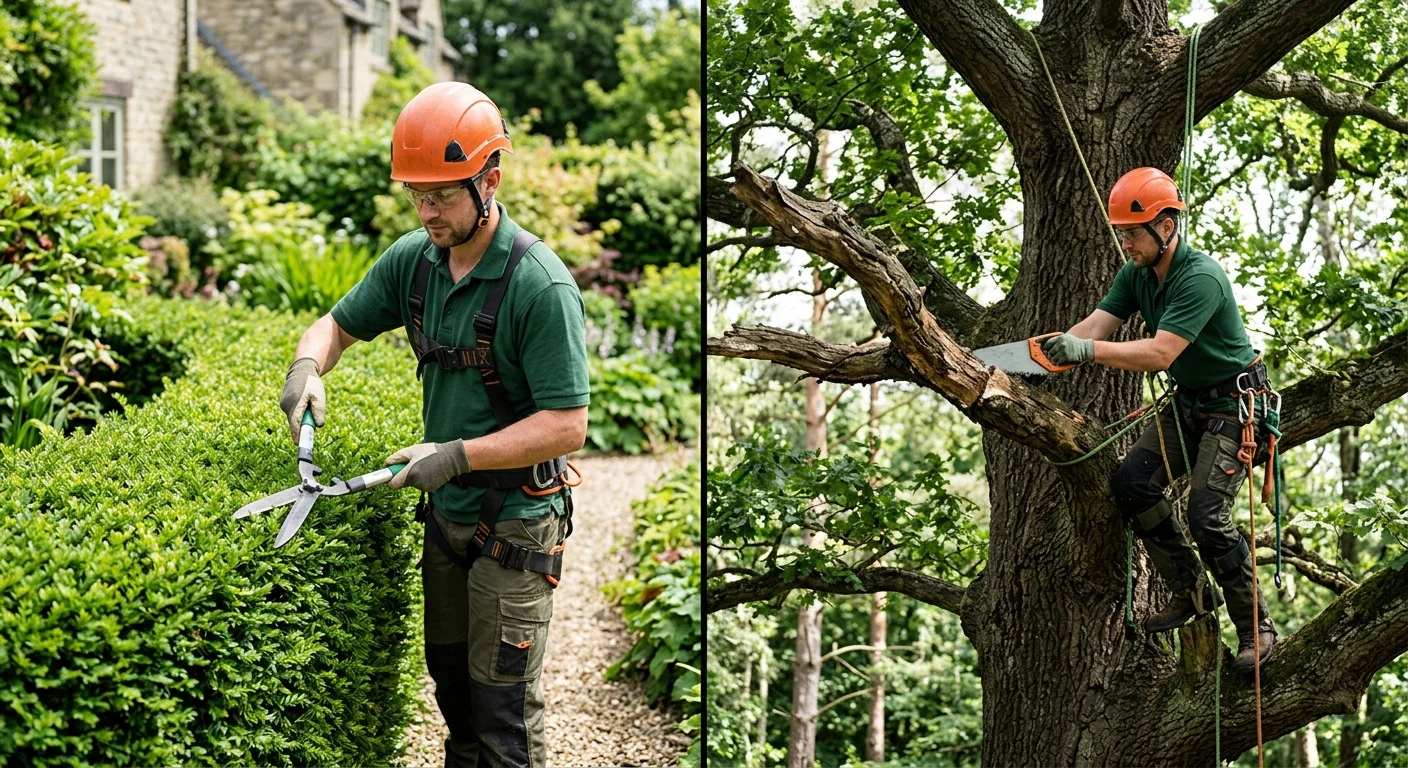
Trimming and pruning are overlapping names for cutting live or dead parts of a tree. TCIA’s pruning-and-trimming page lists shared objectives: risk, health, structure, clearance, size and shape, appearance, production, and habitat. The useful question is what you want changed on this tree, not which word is printed on the invoice.
Branch Pro San Diego connects you with licensed, insured independent local tree companies. You hire and pay that company.
The words overlap. The written objective shouldn’t.
The same visit can cover more than one objective: deadwood, a roof gap, and a long limb. Name those objectives in the quote so clearance, shape, deadwood, and structure don’t get billed as a vague trim.
What does change the job is the prescription. A TCIA explanation of current A300 practice says dose should fit the objective, species, vigor, health, and interval. Writing “to ANSI standards” is not a specification. Ask for the tree, the goal, the parts to be cut, and why. Ask who monitors the tree afterward.
TCIA flags topping, lion-tailing, and over-thinning palms as adverse practices. If a quote uses those patterns, or vague “wind-sail” thinning, have them name the actual branches instead. Our topping guide covers why heading to stubs is a different, harmful pattern.
Trees compartmentalize wounds. They don’t heal like skin. A clean cut still leaves a wound the tree has to wall off. That’s why each live cut needs a reason.
Compare the job by objective
Use this table when you read a San Diego quote. Keep the company’s wording in the same row as your goal.
| Objective | What the written scope should name |
|---|---|
| Clearance | Which limbs, off which roof, walk, drive, or sign, and how much space you want |
| Shape or appearance | Whether the plan is shearing, selective reduction, or something else, and what form should remain |
| Dead, dying, or broken wood | Which pieces come out, and which attached live tissue stays |
| Structure | Which unions, competing stems, or included bark, and what the cut is meant to change |
| Size | Reduction to named laterals, not an arbitrary heading line |
| Fruit or flowers | The species-specific purpose. Pruning is not a yield guarantee |
| Habitat or wildlife | Whether occupied nests were considered, and what happens if they are found |
| Palms | Dead or dying fronds and fruit or flower clusters versus living foliage, plus protection of the bud |
ISA’s palm brochure treats normal palm work as removing dead or dying fronds and fruiting structures as the site requires. Keep healthy foliage. Limited clearance cuts, including some live fronds below horizontal, can be appropriate. Stripping a green crown, skinning the trunk, or using spikes on a living palm is a different, damaging pattern.
For young shade trees, Iowa State’s young-tree pruning page supports keeping small temporary lower branches while the trunk develops, instead of stripping them all at once. A central leader fits many shade trees. Naturally multi-stemmed species, and palms, should not be forced into that form.
What a San Diego quote should make specific
A tree trimming visit that only says “shape the canopy” can mean shearing, reduction, or topping. A tree pruning visit that only says “health prune” can mean deadwood, a structural cut, or a heavy thin. Ask the independent company to review the tree with you from already-safe ground and mark the objective on paper.
ISA’s mature-tree brochure says each cut needs a purpose, and that the dose depends on size, species, age, and objective. Routine thinning does not necessarily improve a tree. Excessive foliage removal reduces energy reserves.
Fruit trees need their own purpose. UC’s citrus cultural tips and avocado cultural tips both say pruning is often not required for production. Ask what the named cuts are meant to change on that species.
If the tree sits in a parkway or on City property, the word on your invoice doesn’t create permission. City of San Diego street trees need City inspection and a no-fee permit before private trimming or removal. Other cities have their own public-tree desks. Confirm the parcel before anyone cuts.
What you can do from the ground, and what you shouldn’t
Hand-pruning a small shrub or hedge you can reach from the ground, with a hand pruner, can be ordinary yard work if the plant is yours and no line is involved. That stops at ladders, power tools, aerial work, felling, rigging, and anything near conductors. If anyone is hurt, or there is an immediate threat to life, call 911. Stay away from overhead lines. Call SDG&E if growth on a standing tree is in the wires. For a downed line, call 911 and SDG&E from a safe place.
An arborist is a person who specializes in tree care. That person may or may not hold an ISA credential. ISA certification is an individual, optional credential, separate from the contractor license. Directory participation is voluntary. You can look a named person up in the ISA credential directory, or ask for that person’s digital certificate. Check the firm’s C-49 or active legacy C-61/D-49 for paid tree work.
How a visit decides what to cut
A useful visit starts with your goal, the species, the tree’s condition, and what it hangs over. The company should then write a scope that maps to the table above. If both keeping the tree and removing it are on the table, get those as separate documents. How to read a trim-or-removal assessment covers that split.
If birds could be nesting, CDFW recommends a consulting biologist’s survey. February through August is typical for many species. Nesting can happen in other months. An active nest is not a trimming-versus-pruning detail. It’s a reason to buffer or wait.
Frequently asked questions
What is the difference between tree trimming and tree pruning?
In practice, both words describe cutting for a stated objective. TCIA treats them together. The difference that matters is whether the quote names clearance, shape, deadwood, structure, size, fruit, or palm work.
Do I need trimming or pruning for my trees?
You need a named outcome. Overgrown into a roof is clearance. A view you want kept is shape with enough live crown left. Dead or hanging wood is deadwood removal. Weak unions are a structure question. Many trees need more than one of those, written as one scope.
What is the difference between an arborist and a tree service?
An arborist specializes in tree care and may or may not hold an ISA credential. ISA certification is optional and belongs to an individual. A tree company is the licensed business you hire. The same person can hold both roles, or the cutter and the credential holder can be different people. Ask for the written objective, and verify the license and any named credential.
How often should San Diego trees be trimmed or pruned?
Interval follows species, vigor, the last cuts, and the objective. If anyone is hurt, or there is an immediate threat to life, call 911. A standing line conflict goes to SDG&E. A downed line is 911 and SDG&E from a safe place, then a professional assessment of the tree.
Can I prune large branches myself?
Keep hand tools on small plants you can reach from the ground. Don’t climb, don’t use power equipment on trees, and don’t work near lines. Large-tree and off-ground work belongs with a qualified company that names the method.
When to call us
When you want a licensed local company to quote a named objective, call (858) 400-4423. We’ll connect you with an independent tree service. You hire that company for the inspection and the cuts you approve.