Living in North County San Diego, especially in rural communities like Fallbrook, Bonsall, and Valley Center, means enjoying expansive properties and natural beauty. However, it also means facing a heightened risk of wildfires. Creating and maintaining defensible space isn’t just a recommendation here; it’s a critical strategy for protecting your home, your family, and your investments.
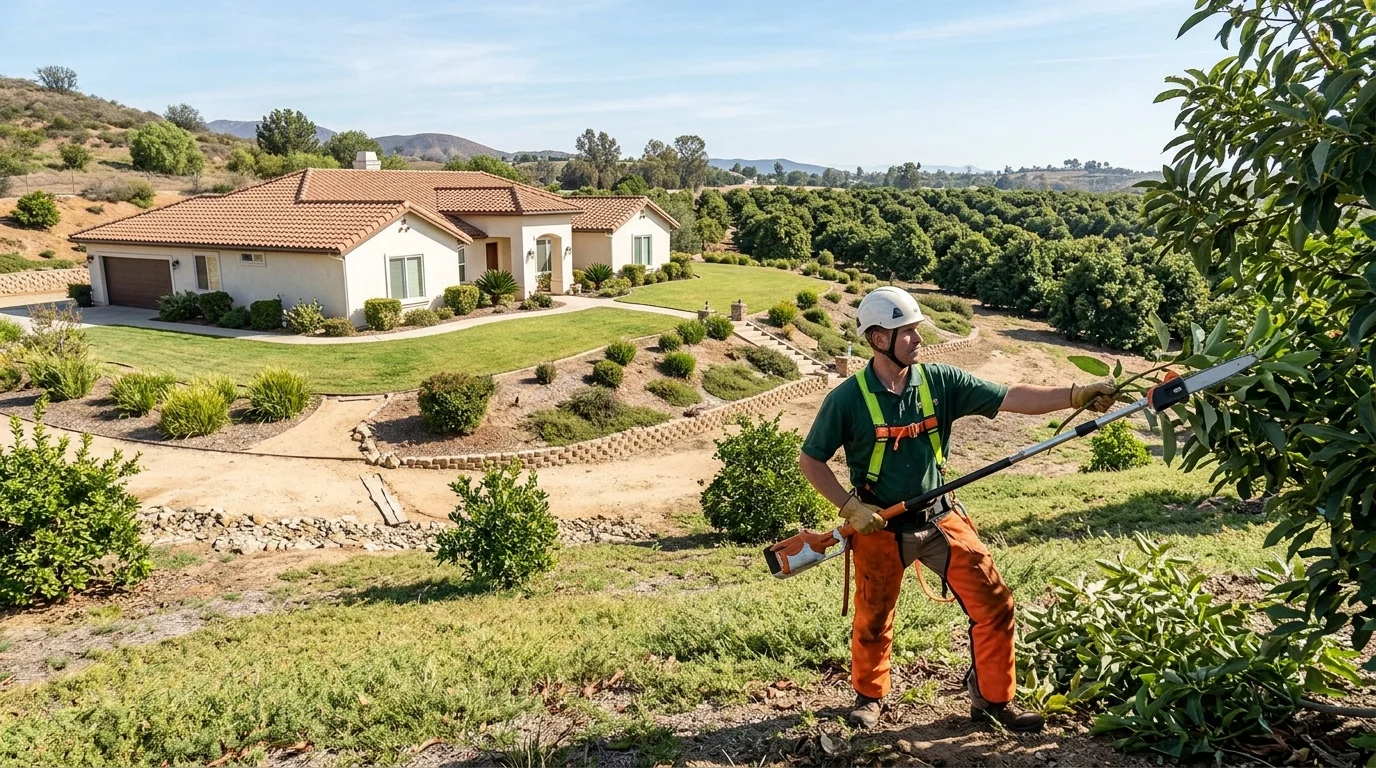
Why North County’s rural and agricultural properties are at high risk
The landscape of North County is distinct from San Diego’s urban and coastal areas. Here, you’ll find larger parcels of land, often featuring dense chaparral, rolling hills, steep canyons, and extensive agricultural operations like avocado and citrus groves. This unique blend creates a significant wildfire hazard.
Consider Fallbrook, known as the “Avocado Capital of the World,” or the equestrian ranches of Bonsall. These areas are beautiful, but the dense vegetation and drier conditions, especially during the Santa Ana wind season, make them extremely vulnerable. Wildfires can spread rapidly through dry grasses, brush, and even mature groves if not properly managed. The rural roads, while scenic, can also become critical choke points for evacuation and emergency access during a fast-moving fire.
The proximity to undeveloped wilderness and the prevalence of highly flammable native plants like chamise and scrub oaks mean that embers can travel great distances, igniting spot fires far ahead of the main fire front. Effective defensible space acts as your property’s first line of defense, giving firefighters a safer area to work and significantly increasing the chances your home will survive. It’s about understanding our specific regional challenges and proactively preparing for them.
CAL FIRE requirements for large properties and groves
In fire-prone regions like North County, CAL FIRE establishes clear guidelines for defensible space. These aren’t suggestions; they’re mandatory requirements designed to protect lives and property. For larger properties and those with agricultural groves, these regulations often involve more extensive planning and execution than for typical suburban lots.
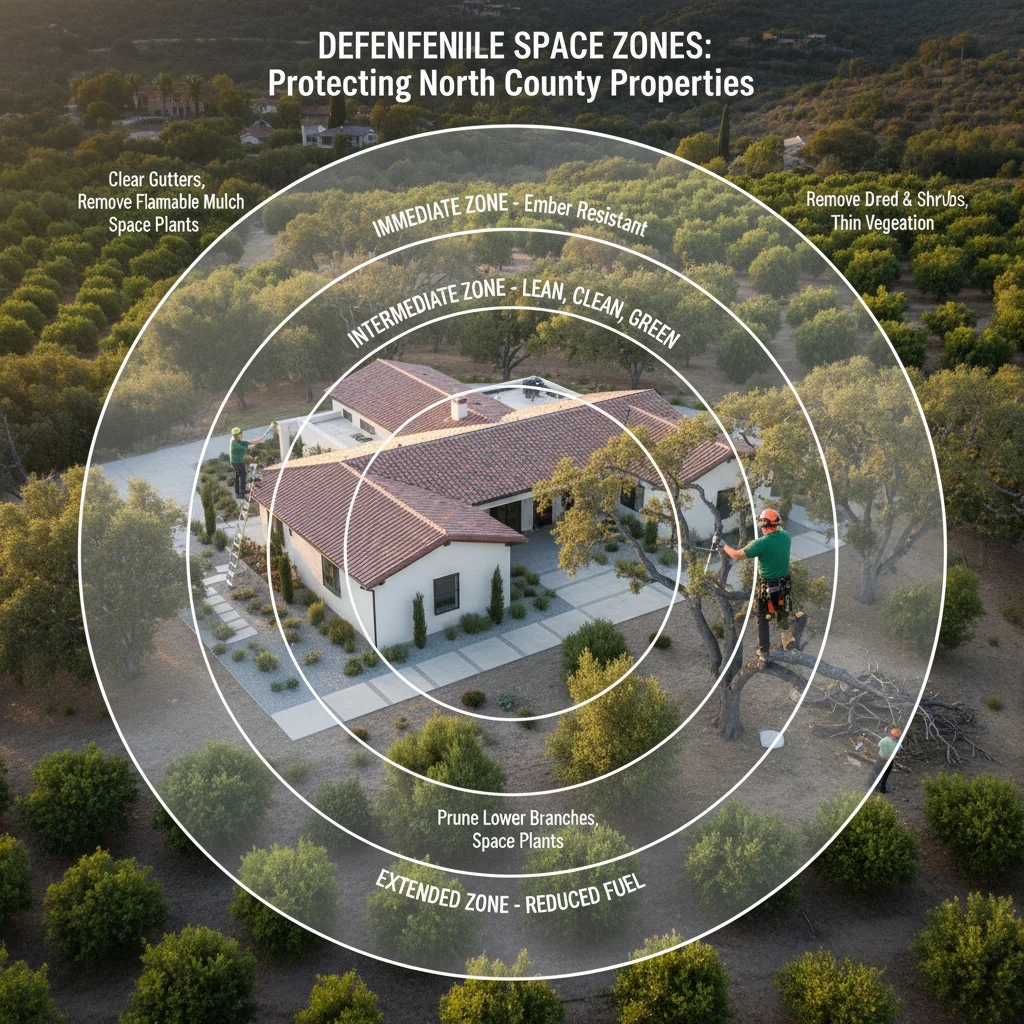
The core concept is to create a 100-foot buffer around your home and other structures, broken down into two zones:
Zone 1: The immediate zone (0-5 feet from your home)
This zone should be free of anything combustible. This means no flammable plants, woodpiles, or patio furniture that could catch fire near your house. Use hardscaping, gravel, or irrigated, fire-resistant landscaping. Your gutters should be clean, and vents should be screened to prevent ember intrusion. This ember-resistant zone is critical because flying embers are the primary cause of homes burning in wildfires.
Zone 2: The intermediate zone (5-30 feet from your home)
Here, vegetation should be “lean, clean, and green.” Remove all dead plants, leaves, and needles. Space out plants so fire can’t easily jump from one to another. Shrubs should be no taller than 18 inches. Trees should be pruned to remove lower branches (at least 6 feet from the ground, or one-third of the tree’s height, whichever is less) and spaced to prevent canopies from touching each other or your home.
Zone 3: The extended zone (30-100 feet from your home)
This zone focuses on reducing the intensity of a wildfire. Remove all dead and dying trees and shrubs. Thin out healthy vegetation, especially highly flammable species like eucalyptus and dense chaparral. For avocado groves, ensure that trees are pruned and cleared of dead material, and that fire breaks or clearings are maintained around structures within or near the grove. Maintaining open spaces and reducing fuel loads here slows a fire down, making it more manageable for firefighters.
These regulations are serious, and local fire departments conduct inspections to ensure compliance. Understanding and adhering to these requirements is your responsibility as a property owner. For a deeper dive into specific tree requirements within these zones, you can refer to our guide on defensible space tree requirements in San Diego. You can also check the official CAL FIRE website for comprehensive guidance and local amendments to regulations.
Clearing brush and creating fuel breaks: what’s involved
Creating defensible space in North County often means tackling significant amounts of vegetation. This isn’t just about trimming; it’s about strategic land clearing and establishing effective fuel breaks, particularly crucial for properties with large acreage or adjoining wildlands.
Brush Clearing: This involves removing or significantly reducing dense undergrowth, dead shrubs, and highly flammable vegetation. We use specialized equipment like masticators, brush chippers, and heavy-duty mowers to efficiently clear large areas. This process reduces the “ladder fuels” that allow ground fires to climb into tree canopies. It’s about creating a landscape where fire has less continuous fuel to consume.
Creating Fuel Breaks: For larger properties, especially those bordering open spaces or agricultural groves, establishing distinct fuel breaks is vital. A fuel break is essentially a strip of land where all flammable vegetation has been removed or drastically reduced. These breaks can follow property lines, access roads, or natural contours of the land. They don’t stop a wildfire entirely, but they can slow its progress, change its direction, and provide firefighters with a strategic advantage and safe zone to fight the blaze. This might involve grading, clearing all ground cover, or planting fire-resistant, irrigated vegetation.
The process of land clearing and defensible space requires careful planning. You need to identify the most hazardous areas, consider the natural topography, and ensure that the clearing methods are sustainable and compliant with local regulations. It’s often too big a job for a homeowner with typical garden tools, given the scale and density of vegetation in areas like Valley Center. Professional land clearing ensures the work is done safely, effectively, and to the rigorous standards required for wildfire protection.
Properly pruning oaks and eucalyptus for fire safety
When it comes to fire-safe landscaping in North County, certain tree species demand specific attention due to their prevalence and fire characteristics. Coast live oaks and various eucalyptus species are particularly common in Fallbrook, Bonsall, and Valley Center, and they pose unique challenges for wildfire preparedness.
Oak Trees: Our native coast live oaks are beautiful and iconic, but they also require careful management for fire safety. Deadwood is a significant fire hazard in oaks. It dries out quickly and can ignite easily, allowing fire to spread into the canopy. Regular pruning to remove dead, diseased, or dying branches is crucial. Additionally, lift the canopies of oaks, ensuring the lowest branches are at least 6 feet from the ground or one-third the height of the tree, whichever is less. This creates vertical clearance, preventing ground fires from reaching the canopy and turning into a more dangerous crown fire. Be mindful of oak health; improper pruning can stress the tree, making it vulnerable to pests like the gold-spotted oak borer.
Eucalyptus Trees: Eucalyptus species, while offering fast growth and shade, are notorious for their high flammability. Their bark often sheds in long, dry strips, creating highly combustible ground fuel, and their leaves contain volatile oils that can explode and spread embers rapidly during a fire. Managing eucalyptus for fire safety is a complex task. Aggressive pruning can reduce the fuel load, but their rapid regrowth means constant vigilance. For eucalyptus within defensible space zones, consider more radical solutions like complete removal, especially if they are close to structures or present an extreme hazard. If removal isn’t feasible or desired, consistent pruning to remove dead branches, bark, and lower limbs is essential. You can learn more about specific risks and management strategies in our post on eucalyptus tree dangers in San Diego or our Eucalyptus Removal & Management service page.
Proper pruning is about more than just aesthetics; it’s a strategic fire safety measure. Understanding the unique properties of the trees on your North County property is key to an effective defensible space plan.
Year-round maintenance tips for wildfire preparedness
Defensible space isn’t a one-time project; it’s a year-round commitment, especially for North County property owners. The dry climate and seasonal Santa Ana winds mean vigilance is always necessary. Regular maintenance is what keeps your property prepared for the unexpected.
Here’s a checklist for ongoing wildfire preparedness:
- Routine Clearing: Throughout the year, clear dead leaves, pine needles, and other vegetative debris from your roof, gutters, and around the base of your home (within the 0-5 foot immediate zone). These seemingly small accumulations can easily ignite from embers.
- Mowing: Keep grass and weeds mowed to a maximum of 4 inches, especially as they dry out in late spring and summer. Dry grasses are highly flammable and can carry fire quickly across your property.
- Pruning: Regularly inspect trees and shrubs. Remove dead branches, thin out dense growth, and ensure proper spacing. Pay particular attention to tree limbs overhanging your roof or power lines.
- Wood Piles: Store firewood and other combustible materials at least 30 feet away from your home or any other structures. Elevate woodpiles to reduce contact with ground fuels.
- Outdoor Storage: Keep propane tanks, barbecues, and other flammable items away from your home and any vegetation. Ensure barbecue grills are on a clear, non-combustible surface.
- Access Roads: If your property has a long driveway or private road, ensure it’s clear of encroaching vegetation and wide enough for emergency vehicles. This is vital for residents in more secluded parts of Valley Center or Fallbrook.
- Irrigation: While not a primary fire prevention strategy, maintaining healthy, hydrated plants in your landscape can make them less susceptible to ignition.
- Hardening Your Home: Beyond vegetation management, consider upgrades like ember-resistant vents, fire-rated roofing, and dual-pane windows to improve your home’s resistance to wildfire.
Staying on top of these tasks can feel continuous, but it’s essential. Waiting until fire season is already here puts you and your property at a significant disadvantage. Consistent, proactive maintenance is your best defense against wildfires in North County.
How professional land clearing saves time and ensures compliance
For property owners in Fallbrook, Bonsall, or Valley Center with larger lots, avocado groves, or extensive wildland interfaces, creating and maintaining defensible space can be a monumental task. This isn’t just about hauling away some brush; it involves specialized equipment, safety protocols, and a deep understanding of CAL FIRE regulations. This is where professional land clearing services become invaluable.
Expertise and Efficiency: Professionals bring not only the right heavy machinery—like masticators, chippers, and excavators—but also the experience to operate them safely and efficiently. We understand the specific vegetation types common in North County and how to best manage them for fire safety. This saves you immense time and effort compared to attempting to clear large areas with standard homeowner tools.
Ensuring Compliance: CAL FIRE and local San Diego County ordinances are complex, and they evolve. A professional tree service stays current with these regulations. We know the precise requirements for each defensible space zone, including specific clearances, plant spacing, and the appropriate management for species like oaks and eucalyptus. This ensures your property not only meets safety standards but also passes any necessary inspections, avoiding fines or last-minute scrambles before fire season.
Safety First: Land clearing, especially on uneven terrain or with dense, thorny brush, can be dangerous work. There’s risk involved with heavy machinery, chainsaws, and even just the physical exertion. Our teams are trained in safe work practices and equipped with the proper personal protective equipment, minimizing risk to you and your property. We’re a licensed and insured contractor in California (you can always verify our license at the Contractors State License Board website at www.cslb.ca.gov), giving you peace of mind.
Investing in professional land clearing services means you’re not just clearing brush; you’re investing in peace of mind, expert compliance, and the highest level of protection for your North County home against the ever-present threat of wildfires.
When to call us
When you’re dealing with extensive brush, large groves, or complex defensible space requirements in Fallbrook, Bonsall, or Valley Center, it’s time to call in the professionals. Our licensed and insured arborists have the expertise and equipment to assess your property, develop a compliant defensible space plan, and execute the necessary clearing safely and efficiently. Don’t wait until wildfire season is upon us. Call us at (858) 925-5546 for a same-day estimate.